I started playing pickleball in March 2022 and have never looked back!
Pickleball Rookie is my creative outlet to share what I learn as I enjoy my paddle passion. When I'm not on the court, I love to hang out with my family and explore new places. Born and raised in New York, but I am always looking for reasons to leave.
A $250 paddle is useless if it doesn’t fit your mechanics. The biggest mistake players make when demoing a paddle is simply jumping into a rec game and hoping for the best. To truly know if a paddle is worth buying, you must isolate its features through a strict drilling protocol: test the sweet spot with transition resets, the grit with topspin drops, and the core thickness with kitchen dinks. Whether you borrow from a local rep or use an online demo program, never buy a paddle based on the “Honeymoon Phase” of your first match.
Let’s be honest, if you’ve been following the blog or catching me on the courts lately, you know I’ve been a bit “gear-stagnant.” I’ve been cycling through the same couple of paddles for a while now, waiting for something to actually move the needle. The pickleball market is flooded with “innovations” that are often just new paint jobs.
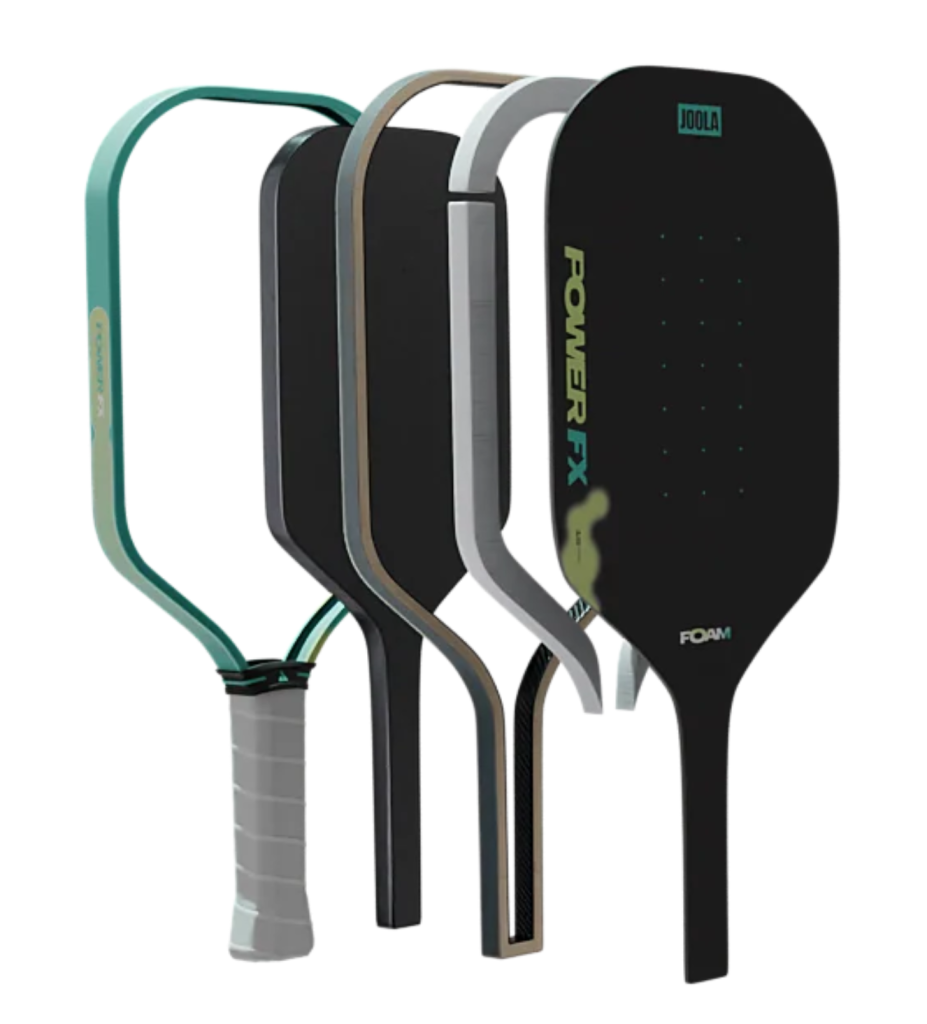
But then JOOLA dropped the specs on the Perseus Pro V, and for the first time in a long time, I’m genuinely itching to get my hands on a new piece of carbon fiber.
Here is why this launch feels different and why the “Pro V” might be the shift we’ve been waiting for.
The foam-core revolution is officially here, and it’s getting loud. If you’ve been hanging around the courts lately, you’ve probably heard that deep “thud” of a foam-filled paddle. It’s a completely different feel than the hollow “clack” we’ve all used for years.
Today, I’m putting two of the newest and most hyped 2026 releases against each other. In one corner, we have theHonolulu J2NF, a paddle being hailed as the “Forgiveness King.” In the other, the 11SIX24 Vapor Power 2, a brand-new “value disruptor” that just launched with a surface texture—HexGrit—that looks like it could peel the paint off a car.
I’ve spent the last week rotating between these two in competitive play. While they both use foam, they represent two completely different philosophies of the game.
Let’s be real for a second. We’ve all been there: you’ve just finished a three-hour marathon session at the local park, you’ve hit the dink of your life, and you’re feeling like a total pro. Then, you try to get out of your car at home and—creak—your knees decide to remind you that you aren’t twenty anymore.
If your knees are screaming louder than a banger who just missed a put-away, it might not just be “getting older.” It might be your shoes.
In pickleball, we’re constantly shuffling, pivoting, and lunging. If your shoes aren’t absorbing that impact, your knees are doing the heavy lifting for them. Is it time to stop blaming the court and start looking at your feet?
Here is the Pickleball Rookie guide to finding the best shoes for knee support in 2026.
Yesterday brought some big news out of Las Vegas that’s getting everyone in the pickleball world talking: tennis legend Andre Agassi is launching the World Series of Pickleball, headquartered right here in Sin City.
On the surface, this sounds fantastic. An eight-time Grand Slam champion with deep Las Vegas roots creating a global pickleball championship? Count me in. But as someone who’s been following this sport’s professionalization closely, I’ve got questions. Let’s dig into what we know, what we don’t know, and what this really means for the future of professional pickleball.
You’re two games into a rally-heavy match, your heart’s pounding like a jackhammer, and your opponent is already bouncing on their toes ready to serve. Again. You just want three seconds to breathe, but they’re treating this like the US Open finals.
Sound familiar?
Here’s the truth: pickleball matches can get sneakily fast. One minute you’re casually dinking at the kitchen, the next you’re in a frantic firefight that has your Apple Watch sending you concerned notifications. And when momentum swings—especially when it swings against you—some opponents will try to rush you, serving quickly to keep you flustered and off-balance.
But you don’t have to let them control the pace. There are plenty of legal, tactical ways to steal a few precious seconds, calm your nervous system, and get back in control of the match. Some are obvious. Others are delightfully sneaky. All of them work.
Anna Leigh Waters’ signature Franklin Aurelius paddle officially received UPA-A certification on February 6, 2026, fast-tracking its debut for the PPA Cape Coral Open. While Waters will compete with the highly aggressive 12.7mm model, the paddle is available for pre-order in three core thicknesses (12.7mm, 14mm, 16mm) and ships starting March 1, 2026. This certification marks a major shift in the paddle market, as Franklin cements its new flagship partnership following the departure of JW and Jorja Johnson.
In case you missed it while scrolling through your feed yesterday, there was a small but significant announcement in the professional pickleball world: Anna Leigh Waters’ signature Franklin paddle, the Aurelius, received UPA-A certification on Friday, February 6th. For most recreational players, this might seem like inside baseball. But if you care about where professional pickleball is heading—or if you’re one of the thousands already eyeing this paddle for yourself—this approval is a bigger deal than it first appears.
Let’s break down what just happened, why it matters, and what it tells us about the current state of paddle technology and player equipment deals.
I still remember the first time I played pickleball. I stood at the baseline, terrified of the seven-foot zone in front of the net like it was actual hot lava. I had been told by a well-meaning (but dead wrong) regular that “you can’t go in there unless the ball bounces in there.”
For three weeks, I played like a statue, afraid to toe the line.
It turns out, I was wrong. And that guy at the local courts? He was wrong too.
The “Kitchen”—officially known as the Non-Volley Zone (NVZ)—is the most misunderstood part of this sport. It is also the single biggest reason beginners lose points they shouldn’t.
If you have ever argued with your partner about whether they “momentum fell” into the zone or if you are allowed to step in before the ball bounces, this guide is for you.
If your opponent is driving your drop shot back at you, your drop shot isn’t “good”—it’s too high. The harsh truth is that a “soft” drop often floats. In 2026, the game has moved beyond the feather-soft dink to the “Drip” (a Hybrid Drive/Drop). To stop the smash, you need to lower your apex, switch from backspin to topspin, and stop rushing the net.
If you play hard on the weekend and can’t walk down the stairs on Tuesday, you are suffering from “Pickleball Hangover” (Delayed Onset Muscle Soreness). The mistake most players make is doing nothing—sitting on the couch only makes the stiffness worse. In 2026, smart players are trading ice packs for active recovery tools like Firefly Recovery Straps and Incrediwear Sleeves, which flush out inflammation while they sit at their desks.
You know the drill. You play four hours of pickleball on Sunday morning. “One more game,” everyone says. You feel tired but fine on Monday. But when you wake up Tuesday, your knees are stiff, your calves are screaming, and your lower back feels like it’s fused shut.