
Last Updated on October 19, 2026 by Drew Pierce
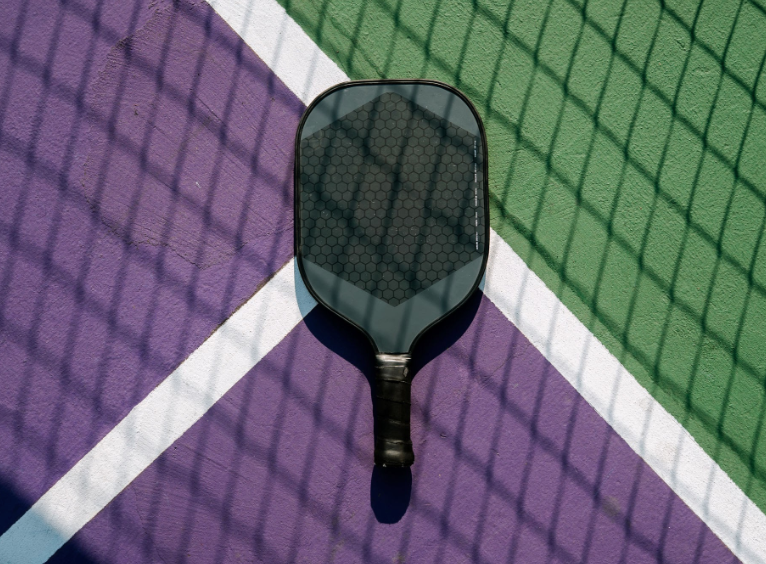
To tell if your pickleball paddle is dead, tap the face in a grid and listen for dull spots, press the center for crunching or give, and drop a ball on different spots to compare the bounce. Then look for cracks or a face lifting off the core. No home test is conclusive. And “dead” doesn’t always mean weaker. A broken-down core often makes a paddle hotter.
In 2023, I had a dreadful night on the court and did what any reasonable adult would do. I blamed my paddle.
Then I wrote a whole post about paddle lifespan and admitted the uncomfortable part: short of an X-ray machine, “there is no true way to test a paddle.”
I still don’t own an X-ray machine. At home, that line mostly holds up. What’s changed is that the people who build paddles, run them through lab machines, and police them at tournaments now say a lot more about how paddles fail. So I went through what they’ve published. Everything below comes from manufacturers, testing labs, and the rulebook, not from me knocking on paddles in my garage. I’ll tell you which source is which, because they don’t always agree.
Quick Answer: Is My Paddle Actually Dead?
- “Dead” is really four problems. A worn face, a crushed core, a face separating from the core, or a bad night that isn’t the paddle’s fault.
- Broken-down paddles often get hotter, not softer. USA Pickleball says its most common tournament test failure is a paddle that has “broken down,” and that usually shows up as extra power.
- Home checks screen. They don’t diagnose. Tap, press, bounce, look.
- Visible damage is a rules problem. Rule 3.D.5.a in the 2026 USA Pickleball rulebook bans holes, cracks, delamination or indentations that break the surface.
- Warranties cover defects, not wear. Terms run from six months to “limited lifetime,” and most want you to register.
What Does “Dead Paddle” Actually Mean?
When the guy on the next court says his paddle “died,” he could mean any of these.
Core crush. Selkirk defines it as “the collapse or breakdown of the core,” where the paddle “no longer maintains rigidity and compresses down too far.” Selkirk blames either poor manufacturing or “gradual degradation over time” from repeated hard hits.
Delamination vs. disbonding. Ronbus, a paddle maker, splits these apart. Worth knowing before you email a warranty team:
- Delamination: the face plies come apart from each other.
- Disbonding: the face separates from the core.
Ronbus calls true ply delamination “quite rare.” Disbonding and crushed cores are “far more common.”
Face wear. The grit wears down and your spin goes with it. Annoying, but that’s the surface, not the structure.
You. My 2023 self would like a word.
Does a Dead Paddle Lose Power or Gain It?
It can go either way, and this is where the sources split.
- Selkirk says core crush causes “a loss of power and consistency” plus dead spots. It ties delamination to a “loud ‘pop’ or trampoline effect.”
- Pickle Pro Labs, UPA-A’s testing lab, ran retail paddles through repeated break-in cycles: “All paddles evaluated in this study improve in performance.” Foam cores varied the most.
- USA Pickleball, in a March 19, 2026 report: “over time, your coefficient of friction will go down and then generally your deflection will go up because your core is starting to break down slowly.” Riley Burgess, its VP of equipment compliance, said the most common test failure is “your paddle has broken down,” adding: “Some people probably know their paddle has gotten more powerful and others probably don’t.”
- Pickleball Science, an independent site, opened up six damaged warranty-return paddles. It found crushed cores “by themselves do not necessarily create a more pronounced trampoline effect.”
So “dead” might mean less spin, mushy spots, or a ball that suddenly flies long. Only the first one is harmless. The third is the sneaky one, because it feels like you got stronger. You didn’t. Your paddle got softer in the middle.
How Do I Check My Paddle at Home?
Five quick checks. None of them needs a lab, and none of them proves anything on its own.
| Check | How to do it | What a problem looks like | Who recommends it |
|---|---|---|---|
| Tap test | Tap a grid across the face with a knuckle, pen or hard plastic handle | Dull, hollow or “thud” spots among crisp “pings” | Selkirk; Pickleball Science |
| Press test | Press firmly on the middle of the face | A crunch, or the face gives | Selkirk; Pickleball Science (bending by hand) |
| Bounce test | Drop a ball onto different spots | Uneven bounce, or spots where the ball “dies” | Selkirk |
| Visual check | Look at the face, edges and throat in good light | Cracks, separation, shiny patches, discoloration | Selkirk; USA Pickleball Rule 3.D.5.a |
| Spin check | Feel the face texture and watch your spin | Smooth, polished areas where you hit most | Surface wear, not a structural sign |
A few cautions before you condemn anything:
- The tap test is a first pass. Pickleball Science calls it “an effective initial screening.” Pickleball Cosmos says it’s “not a definitive diagnosis” and can’t tell a crushed core from a failed bond.
- Rattles are disputed. Selkirk’s Boomstik warranty and Six Zero both exclude rattling that “doesn’t affect performance.” UPA-A lists a paddle that “rattles” among the signs it has “reached the end of its usable life.” If yours rattles and plays differently, take it seriously.
- Skip the bathroom scale. No major brand or lab I found recommends weighing a paddle to detect damage.
Get a second opinion. Back in 2023 I suggested hitting a demo of the same model side by side, with one catch: the demo has a history too. My demo guide covers how to make that comparison fair.
What Causes a Paddle to Die?
- Manufacturing. Ronbus says air trapped during thermoforming (hot press molding) can crush parts of the honeycomb before you ever hit a ball. Some paddles are born tired.
- Repeated hard hits. Selkirk, Ronbus and USA Pickleball all describe gradual breakdown from use.
- Heat and moisture. Selkirk says a hot car or wet courts “can weaken the adhesives and materials.” That’s manufacturer guidance, not an independent test. Still, your trunk in August isn’t a paddle bag.
- Cold. Six Zero’s warranty excludes use below 40°F (5°C).
- Hitting things that aren’t balls. Several warranties exclude ground hits and paddle-on-paddle contact. That low scoop off the court counts.
Do foam pickleball paddles core crush?
They’re not immune. They just tend to fail differently. Selkirk says polypropylene honeycomb is “the most prone to core crushing” and foam-filled cores “significantly reduce the risk.”
Pickleball Effect rounded up Reddit owner reports in June 2026 (anecdotal, and the site earns affiliate commissions). The grit usually wore out before the foam core did. The most common structural complaint was disbonding, where the face separates from the core.
Pickle Pro Labs found foam cores break in in ways “highly dependent on core design.” Translation: “foam” on the box doesn’t promise any one thing.
Is a Delaminated Paddle Still Legal?
Not for sanctioned play if the damage is visible. Rule 3.D.5.a of the 2026 USA Pickleball rulebook bans “holes, cracks, delamination, or indentations that break the paddle skin or surface.”
The rulebook isn’t the only gate:
- USA Pickleball’s Equipment Standards Manual (Jan 2025) says a paddle must stay compliant “over the entire useful life of the paddle,” break-in included.
- USA Pickleball’s Golden Ticket events now machine-test paddles for deflection, integrity and delamination. Burgess said about 6% of the 2,000-plus paddles tested failed. That’s more than a hundred people who probably thought their paddle was fine.
- UPA-A, which certifies paddles for PPA and MLP pro events, defines the end of a paddle’s “useful life” as cracks, loose parts, dents or changed structure.
At open play, there is no paddle police. But Burgess frames hot paddles as a safety issue too, and the person across the kitchen didn’t sign up for your paddle’s bonus pop. My paddle legality guide covers the approved lists.
Is It Delamination or Just Peeling Tape?
- Edge guard tape and lead tape are allowed add-ons under Rule 3.D.6. Tape on the face can’t sit more than half an inch inside the edge (Rule 3.D.7). When those peel, the tape is failing, not the paddle. My lead tape guide covers application.
- The factory edge guard wears too. Engage says it “will get scraped and eventually loosen” from ground contact. Six Zero treats minor lifting as normal wear.
- Real delamination is the face itself bubbling, lifting or cracking away from what’s underneath. If a seam opens on the hitting surface, that’s the 3.D.5.a problem.
What Do Paddle Warranties Cover?
Short version: defects, not wear. Here are a few major brands’ terms, checked on their sites October 18, 2026.
| Brand | Paddle warranty | Registration | Notable exclusions |
|---|---|---|---|
| Selkirk (main line) | Limited lifetime, defects | Required to activate | Normal wear; texture/graphic breakdown; chips on edgeless paddles |
| SLK by Selkirk / Selkirk Labs | 1 year / 2 years | Not specified on summary | Ground hits (SLK); wear |
| JOOLA | 6 months; 12 with NFC registration | App, within 14 days | Wear; unauthorized sellers |
| CRBN | 1 year | Within 14 days if bought from a retail partner | Edge nicks, grip wear; structural mods |
| Engage | Limited lifetime | Within 30 days | Wear; hitting the ground or other paddles |
| Paddletek | Limited lifetime “performance guarantee” | Within 14 days | Original owner only |
| Six Zero | 12 months, including core and delamination | Required | Use below 40°F; face wear; rattles |
What that means for you:
- Register on day one. It’s the least fun thing you’ll do with a new paddle and the one that matters most when it fails. Several brands only cover registered paddles, and some deadlines are 14 days.
- Used and marketplace paddles are usually out. JOOLA, CRBN and Engage exclude non-authorized sellers. Keep that in mind before buying used paddles.
- Lifespan numbers come from the brands. Selkirk says competitive players often replace every 3–6 months and rec players get “a year or longer.” Engage says 6–8 months to 3+ years.
Should I Replace It or Demo a New One?
Here’s the order I’d work through:
- Visible crack, seam or face separation? Stop using it in sanctioned play. If it’s under warranty, file a claim with photos or video. JOOLA and CRBN ask for them.
- A dull or crunchy zone, but nothing visible? Describe it to the brand and see what they say.
- Just less spin? Probably face wear, which brands generally don’t cover. Your call.
- Nothing found, but it still feels “off”? Demo the same model. If the new one feels the same, it’s probably not the paddle.
A paddle isn’t a tub of yogurt. It doesn’t come with an expiration date. Sometimes it’s the paddle. Sometimes it’s just a bad Tuesday.
Dead Paddle FAQ
How do I know if my pickleball paddle is dead? Look for dull spots on a tap test, a face that crunches when pressed, uneven bounces, visible cracks, or a sudden change in power. No single home check proves it.
Do pickleball paddles wear out? Yes. Faces lose grit and spin, and cores break down with repeated hard hits. Brands quote lifespans from 3–6 months for competitive players to a year or more for rec players.
Do foam pickleball paddles core crush? Less often. Selkirk says foam-filled cores “significantly reduce the risk.” Owner reports collected by Pickleball Effect (anecdotal) mostly describe grit wearing out first, with disbonding as the main structural complaint.
Does a dead paddle hit harder or softer? It can do either. Selkirk ties core crush to lost power. USA Pickleball says broken-down paddles most often test as more powerful.
Can a delaminated paddle be repaired? I found no manufacturer that offers a home repair, and Rule 3.D.6 limits player alterations to things like tape and grips. Contact the brand’s warranty team.
Is a cracked paddle legal for tournaments? Not if the damage breaks the hitting surface. The 2026 USA Pickleball rulebook (Rule 3.D.5.a) prohibits holes, cracks, delamination and indentations that break the paddle skin or surface.
Does warranty cover a dead paddle? Only if the brand rules it a manufacturing defect. Wear, texture loss and ground hits are commonly excluded.

Drew Pierce is a USA Pickleball Ambassador, PPR certified coach, and tennis crossover who covers beginner tips, paddle releases, and the sport’s growing culture. Read more on his About page or tune into Pickle Rock Radio.