
Last Updated on March 3, 2026 by Drew Pierce
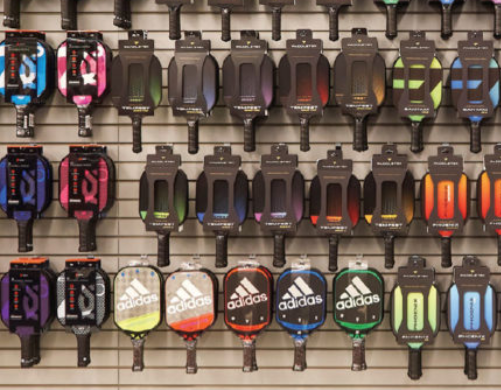
A $250 paddle is useless if it doesn’t fit your mechanics. The biggest mistake players make when demoing a paddle is simply jumping into a rec game and hoping for the best. To truly know if a paddle is worth buying, you must isolate its features through a strict drilling protocol: test the sweet spot with transition resets, the grit with topspin drops, and the core thickness with kitchen dinks. Whether you borrow from a local rep or use an online demo program, never buy a paddle based on the “Honeymoon Phase” of your first match.
Where to Get Your Hands on a Demo
Before you can test a paddle, you need to find one. You essentially have two main routes to explore.
The Local Rep (The Free Route) The fastest and cheapest method is tracking down a local brand rep or “Ambassador” at your pickleball club. Brands like Selkirk, JOOLA, or Engage have representatives who carry bags of paddles specifically for players to try out on the spot. While this gives you free and immediate access to premium gear, the downside is that you are usually restricted to testing just one specific brand, and you typically only get to use the paddle for a couple of hours during a single play session.
Online Demo Programs (The Deep-Dive Route) If you want a more comprehensive comparison, major online retailers offer dedicated “Test Drive” programs. For a flat fee—usually around $25 to $50—they will ship you two or three paddles of your choice to test for a full week. This allows you to compare different brands side-by-side on your home court over multiple days, and the initial fee is usually credited toward your final purchase. The only catch is that you have to be patient for the shipping, and you are on the hook to remember to mail the losing paddles back before your testing window closes. I’ve had great success with Midwest Racquet Sports.
| The Shot | What It Tests | The “Fail” Signal |
|---|---|---|
| Cross-Court Dinks | Control / Core | Popping Up – If your soft dinks consistently bounce too high, the paddle is too “poppy” (stiff) for your current soft game. |
| Deep Serves | Spin / Grit | Sailing Long – If you swing hard and the ball flies out, the paddle face lacks the grit needed to pull the ball down with topspin. |
| 5th Shot Resets | Sweet Spot | Twisting – Block a hard drive. If the paddle twists in your hand and the ball dies on the net, the sweet spot is too small. |
| Fast Volley Battles | Swing Weight | Late Contact – If you are constantly getting jammed or hitting late at the net, the paddle is too “head-heavy” for your hand speed. |
Beware the “Honeymoon Phase”
When you pick up a brand new, premium paddle, your brain goes into hyper-focus mode. Because the paddle feels different, you concentrate harder on your footwork, watch the ball closer, and naturally play better for the first 45 minutes.
This is the Honeymoon Phase.
Do not buy a paddle based on the first hour. By day two or day three, your natural, lazy habits will return. That is when you find out if the paddle actually helps your game. If you are demoing a 14mm power paddle, it might feel like a rocket ship on day one, but by day three, you might realize you can’t drop the ball into the kitchen to save your life.
Check out our pickleball paddle release calendar.
Pickleball Paddle Demo Must-Dos
1. The “Baseline” Rule (Don’t Skip This)
If you walk onto the court and immediately pick up the demo paddle, you are making a massive mistake. You might just be having an “off” day, or your legs might be heavy, and you will unfairly blame the new paddle.
The Fix: Always play your first warm-up game with your current paddle. Establish your baseline for the day. Once you know how your body is moving and how the wind/temperature is affecting the ball, then switch to the demo paddle. This isolates the paddle’s performance from your physical performance.
2. The $2 Demo Hack: Bring Your Own Overgrip
Demo paddles are passed around like bowling shoes. The grips are usually worn out, slick with sweat, and lack the tackiness of a fresh handle. A slippery grip will make even the best paddle feel unstable because you have to squeeze it too hard (the “Death Grip”), which kills your soft game.
The Fix: Buy a 3-pack of cheap overgrips. Before you test a demo paddle, wrap your own overgrip right over the existing handle (you can take it off before returning it). This ensures the paddle feels secure in your hand and gives you a true reading of its performance.
3. Control the Variables: The Ball Matters
Pickleballs are not created equal. A Franklin X-40 is softer and plays slower. A Dura Fast 40 is a rock that plays incredibly fast. A Selkirk Pro S1 has different aerodynamics.
If you normally play with an X-40, but you test your demo paddle using a Dura, the paddle is going to feel jarring, poppy, and out of control. You are testing the ball, not the paddle. Always use your standard tournament or rec ball during the demo week.
4. The Scale Test: Static Weight vs. Swing Weight
You mentioned weighing the paddles—this is a pro-level tip. But you need to explain the difference to your readers so they don’t get confused.
- Static Weight (What the scale says): Put the demo paddle on a kitchen scale. Most paddles fall between 7.8 oz and 8.4 oz. If a paddle is over 8.5 oz, it will fatigue your shoulder over a 3-hour session.
- Swing Weight (How heavy it feels): This is how the weight is distributed. An elongated paddle (16.5 inches) with a heavy head will feel sluggish at the net, even if its static weight is only 8.0 oz. Pay attention to how fast you can move the paddle from your forehand to your backhand (The Shield position). If you are consistently late to the ball, the swing weight is too high for you.
5. The Official “Rookie” Demo Scorecard
| Category | What to Look For | Score (1-10) |
|---|---|---|
| 1. Hand Speed | Can you quickly transition from forehand to backhand at the net? | |
| 2. Reset Control | When blocking a hard drive, does the ball drop in the kitchen or pop up? | |
| 3. Spin Generation | Do your deep serves and drives dip inside the baseline? | |
| 4. Power/Pop | Do you have to swing out of your shoes to put the ball away? | |
| 5. Forgiveness | When you hit the ball off-center (near the edge), does it still go over? | |
| 6. Fatigue (Arm Health) | Does your elbow, wrist, or shoulder hurt after 2 hours? (10 = No Pain) | |
| TOTAL SCORE | (Out of 60 possible points) | / 60 |
The Fatigue Factor (Protect Your Joints)
A paddle might feel perfectly balanced in your living room, but how does it feel during Game 5?
If you are demoing a heavier elongated paddle, pay close attention to the outside of your elbow and your wrist. A paddle with a high swing weight will generate massive power on drives, but it can quickly lead to tendonitis if your arm isn’t used to the drag.

Drew Pierce is a USA Pickleball Ambassador, PPR certified coach, and tennis crossover who covers beginner tips, paddle releases, and the sport’s growing culture. Read more on his About page or tune into Pickle Rock Radio.