
Last Updated on November 22, 2026 by Drew Pierce
Stacking in pickleball is a legal doubles strategy that allows partners to play on their preferred sides of the court, regardless of where the serving rotation puts them. Under the current USA Pickleball rules, the correct player must serve from the correct serving area and the correct receiver must take the serve. The other partners have more freedom to position themselves. Teams use stacking to keep a stronger forehand in the middle, protect a weaker backhand, or take advantage of a left-handed/right-handed partnership.
If you’ve been playing pickleball long enough, you’ve probably encountered a team that stacks.
Two players crowd together on one side of the court, the ball gets served, and suddenly everybody is moving around like they’ve rehearsed a complicated dance routine.
Sometimes it works beautifully. Other times you’re watching two recreational players trying to remember who was supposed to return the serve while the opposing team waits patiently for the confusion to end.
I’ve spent plenty of time playing doubles in the 3.5–4.0 range, and I can appreciate the potential advantages of stacking. I can also appreciate the value of simply knowing where the hell you’re supposed to stand.
So let’s look at what stacking actually accomplishes, how to do it legally, and when it’s probably more trouble than it’s worth.
What Is Stacking in Pickleball?
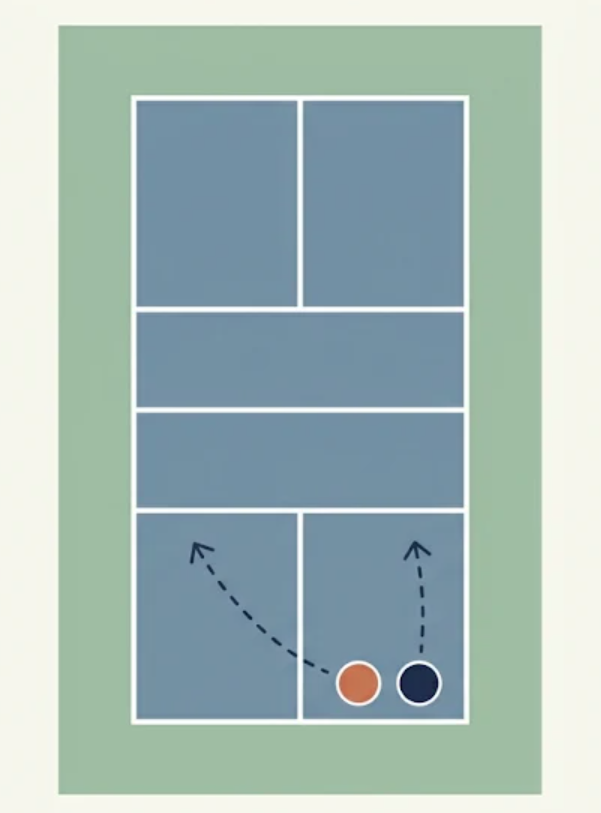
Stacking is a doubles formation in which partners position themselves together toward one side before a serve or return, then move into their preferred left- and right-side positions once the ball is in play.
Normally, doubles partners alternate serving and receiving positions according to the score. You might prefer playing the left side, but the rotation doesn’t particularly care about your preferences.
Stacking allows you to work around that.
For example, imagine you’re right-handed and prefer playing the left side, while your left-handed partner prefers the right. In that arrangement, both of your forehands face the middle of the court.
Rather than accepting whichever side the rotation gives you for the entire rally, you stack so you can return to those preferred positions.
The important distinction is that stacking doesn’t change who is legally required to serve or receive. It changes where the partners position themselves and move once play begins.
And yes, this is different from paddle stacking, where players arrange their paddles in a rack to establish the open-play queue. That’s another term worth knowing if you’re new to pickleball terminology.
Why Do Pickleball Teams Stack?
There are several legitimate reasons for stacking, although I suspect some recreational players do it primarily because they’ve seen professional teams doing it on YouTube.
The most common reasons include:
- Keeping forehands in the middle: A right-handed player on the left and a left-handed player on the right can both cover the center with their forehands.
- Protecting a weaker backhand: If one player struggles on a particular side, stacking can help keep that weakness from being exposed repeatedly.
- Keeping partners on their preferred sides: Some players are more comfortable handling certain shots, angles or responsibilities from one side of the court.
- Taking advantage of a team’s strengths: A partnership may have a strategic reason to keep one player in a particular position.
None of this guarantees better pickleball.
In fact, stacking can make a perfectly functional doubles team worse if the players spend more time worrying about their formation than watching the ball.
The strategy needs to accomplish something. If you can’t explain why you’re stacking, you probably don’t need to.
Full Stack vs. Half Stack in Pickleball: What’s the Difference?
You’ll hear coaches and players refer to a full stack and a half stack. These are common strategy terms, not official classifications in the USA Pickleball rulebook.
A half stack usually means stacking only when your team is serving. A full stack means stacking when serving and receiving.
Here’s how they compare.
| Formation | When You Stack | Main Advantage | Main Challenge |
|---|---|---|---|
| Traditional doubles | No planned stacking | Simple positioning and rotation | Partners sometimes play on less-preferred sides |
| Half stack | Usually when serving only | Easier introduction to preferred-side positioning | You don’t maintain preferred sides on every rally |
| Full stack | When serving and receiving | More consistent preferred-side positions | More communication and movement, especially on returns |
Half Stacking: The Easier Place to Start
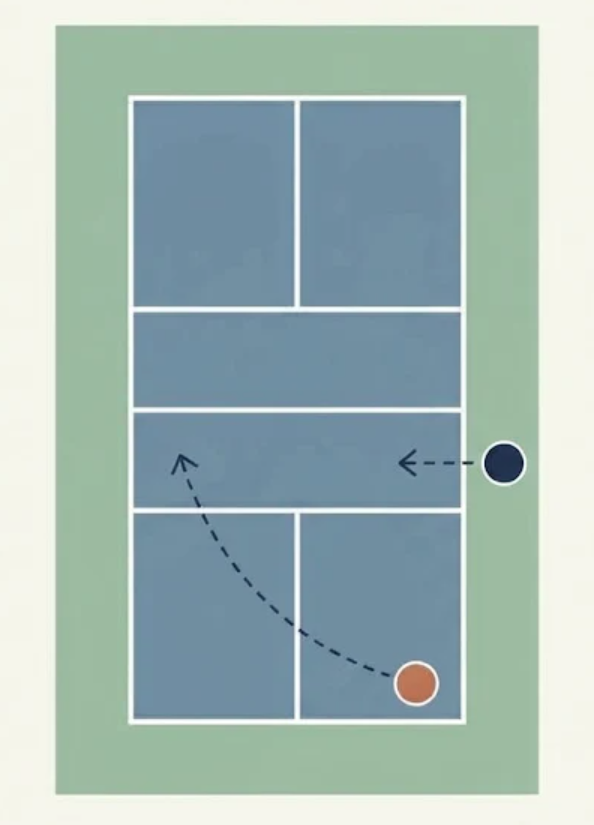
When your team is serving, you generally have more time to organize your formation.
The correct server goes to the required serving area. The partner sets up in a position that allows both players to move into their preferred sides after the serve.
There’s less urgency because your team has control of when the point begins, subject to the serving rules.
For a regular recreational partnership interested in stacking, I’d start here.
Get comfortable with the movement when serving before making things more complicated.
Full Stacking: Serving and Receiving
Full stacking takes things a step further by maintaining preferred positions even when your team is receiving.
This is where coordination becomes more demanding.
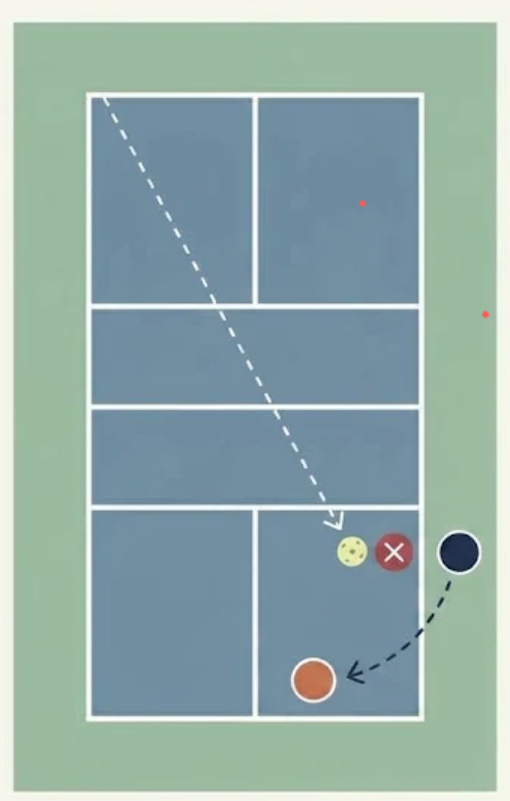
The correct receiver must return the serve from the proper service court. Meanwhile, their partner may be waiting outside the sideline, prepared to move into position after the return.
If the returner has to run across the court immediately after hitting the ball, both players need to understand who is covering which space.
And they need to do it without running into each other.
A deep, controlled return can give the receiving team a little more time to make that adjustment. Trying to hit a spectacular winner while simultaneously changing sides is usually asking a lot of yourself.
Particularly if you’re still trying to remember the score.
How to Stack in Pickleball: A Simple Example
Let’s use a right-handed player and a left-handed player who want to keep both forehands covering the middle.
Their preferred positions are:
| Player | Preferred Side | Why |
|---|---|---|
| Right-handed player | Left | Forehand faces the center |
| Left-handed player | Right | Forehand faces the center |
When serving: Suppose the right-handed player is the correct server and must serve from the right serving area. They make the legal serve, then move toward their preferred left-side position while their partner moves right.
When receiving: Suppose the right-handed player is the correct receiver on the right. They must receive the serve there. After hitting the return, they can move left while the left-handed partner moves right.
The second example is trickier because the returning player must complete the shot and then reposition without leaving a large gap.
That’s the basic concept. The legal serving and receiving positions remain tied to the score, while the players arrange themselves to reach their preferred positions during the rally.
For your first attempt, practice the movement without a ball. Then try it with easy serves and returns before introducing it into a competitive game.
You don’t need to complicate the rest of your game while you’re learning the formation.
Is Stacking Legal in Pickleball Under the 2026 Rules?
Yes. Stacking is legal under the 2026 USA Pickleball Official Rulebook. The rulebook doesn’t specifically use the word stacking, but Rules 5.B.1, 5.B.3 and 5.B.4 establish the requirements that allow it.
Here’s what matters.
Rule 5.B.1: The Correct Server and Receiver
The correct player must serve from the correct serving area, and the correct receiver must receive the serve.
You cannot change who receives simply because your partner would be better positioned to handle a particular serve.
Rule 5.B.3: The Score Determines Serving and Receiving Positions
Each team’s score determines which partner is the correct server or receiver and where that player belongs.
The starting server—the player designated at the beginning of the game—belongs on the right when their team’s score is zero or even, and on the left when it’s odd, whenever that player is serving or receiving.
Their partner has the opposite correct serving or receiving side.
If that sounds confusing, it helps to get comfortable with how doubles scoring works before attempting to stack.
Stacking doesn’t eliminate the rules about who serves or receives. It just adds movement around them.
Rule 5.B.4: Partners Have Freedom to Position Themselves
This is the rule that makes stacking possible.
Except for the players actually serving and receiving, the rules do not restrict where players position themselves on or off the court, provided they remain on their own end of the net while the ball is live, subject to the rulebook’s narrow net-plane exception.
That means the non-receiving partner can wait outside the sideline rather than occupying the opposite service court.
Once the serve has been hit, players can move into their preferred positions.
You can review all three provisions in the 2026 USA Pickleball Official Rulebook, Section 5.B.
Common Pickleball Stacking Mistakes
Most stacking mistakes have nothing to do with some obscure regulation. They’re basic positioning and communication problems.
Forgetting who’s supposed to return the serve. This is the big one. The formation may look different, but the correct receiver remains determined by the score.
Leaving the middle of the court open. If both partners are moving while the opponent is preparing to hit, you can create a pretty inviting target.
Getting in your partner’s way. Two players crossing paths near the kitchen line can turn a manageable return into a collision.
Standing where the serve might hit you. Under Rule 7.E.5, if a serve hits the receiver or their partner before bouncing, it’s a fault against the receiving team. Waiting outside the court doesn’t make you immune.
Arguing about the rotation after the point. Sorting out the correct server and receiver before play is a lot more pleasant than having a four-person debate in the middle of open play.
There’s another procedural wrinkle worth knowing: under Rule 6.D.2, if the serving team changes serving areas after the score has been called, everyone must be given time to reposition and the score must be called again.
The takeaway? Get organized before the serve.
What Happens If the Wrong Person Receives During a Stack?
This is one of the more confusing parts of the 2026 rules because the outcome depends on the circumstances.
Under Rule 5.C:
- If a correct server or receiver was out of position when the score was called, and a player correctly stops the rally to identify the error, the rally is replayed.
- If someone stops a rally to make an incorrect positioning claim, the player who stopped play commits a fault.
- If the correct server and receiver were properly positioned when the score was called, but the wrong player returns the serve, that is a fault against the player who returned it. It can be called after the rally, but before the next serve.
- If an original positioning error is discovered only after the rally is completed, the rally result stands.
I wouldn’t expect anyone to memorize every subsection before their next Wednesday-night doubles match.
But I would remember this: if you’re not sure who should serve or receive, ask before the ball is hit.
Rule 5.C allows players to ask the opposing team about the correct server, receiver or player positions before the serve. The opposing team must answer.
A quick question can save an unnecessary argument.
When Should Recreational Players Avoid Stacking?
I’m certainly not against stacking. I just don’t think it should be treated as an inevitable step on the journey from recreational player to serious competitor.
There are plenty of good 3.5 and 4.0 players who don’t need it.
I’d skip stacking under a few circumstances.
You’re playing with somebody you just met. Unless you both understand the formation and agree beforehand, there’s no reason to surprise your new partner with an elaborate movement pattern.
You’re still learning the scoring system. Keep your attention on the correct server, the correct receiver and getting the ball over the net.
Your team doesn’t have a meaningful positional advantage. If both partners are equally comfortable on either side, stacking may create work without improving anything.
You keep giving up easy points. If the extra movement produces missed returns, confusion or openings down the middle, the strategy isn’t helping.
And if your goal is to move from 3.5 to 4.0 pickleball, I’d still put consistent returns, better resets, fewer unforced errors and smart positioning ahead of learning a complicated stack.
Stacking may improve an already solid partnership. It won’t magically fix one.
Do You Need Hand Signals to Stack?
No. There is no official rule requiring hand signals for stacking.
Some doubles teams use signals behind their backs, particularly when the player closest to the kitchen wants to tell their partner whether to stay or switch.
A closed fist commonly means stay, while an open hand means switch. But those meanings aren’t universal.
Agree on them before playing.
If you don’t have an established signal system, just talk to your partner between points. There’s no prize for making a recreational match look like a covert military operation.
And if your partner has no idea what you’re signaling, the hand gesture isn’t accomplishing much.
I’ve always believed that being a good doubles partner has more to do with communicating clearly than demonstrating how many strategies you know.
Is Stacking Worth It for Recreational Pickleball?
It can be, particularly if you play regularly with the same partner and have an obvious reason to maintain your preferred sides.
A left-handed/right-handed team is an especially good example. Keeping two forehands available in the middle may be worth the added movement and coordination.
But don’t feel obligated to stack because better players do it.
If you’re already returning consistently, moving well together and winning your share of rallies, there’s no reason to complicate things just to look more sophisticated.
My advice would be to start with a half stack during practice, see whether you gain a genuine advantage and decide whether the extra movement is worthwhile.
If it works, great. If you spend the entire game trying to remember where you’re supposed to stand, you have your answer.
Frequently Asked Questions About Pickleball Stacking
What is stacking in pickleball?
Stacking is a doubles positioning strategy where partners start together toward one side of the court before a serve or return, then move to their preferred sides after the ball is put into play. It allows players to maintain strategic court positions despite the serving and receiving rotation.
Is stacking legal in pickleball?
Yes. Under the 2026 USA Pickleball rules, stacking is legal as long as the correct server serves from the proper serving area and the correct receiver receives the serve. Other players may position themselves on or off the court on their end of the net.
What is the difference between full stacking and half stacking?
Half stacking usually means using the formation only when your team serves. Full stacking means using it when both serving and receiving, allowing partners to maintain preferred positions more consistently throughout the game.
Can the receiving partner stand outside the court?
Yes. Rule 5.B.4 permits the partner who is not receiving to stand off the court on their team’s end of the net. That player should remain clear of the serve and be prepared to move into position after the return.
Does stacking change who serves or receives?
No. Stacking does not change the serving order or the identity of the correct receiver. The score still determines which player must serve or receive and from which side.
Do both partners have to be left-handed and right-handed to stack?
No. Left-handed/right-handed pairs are a common reason to stack, but two right-handed players or two left-handed players may also stack to maintain preferred sides or protect a weakness.
Should beginners stack in pickleball?
Usually not. Beginners generally benefit more from understanding scoring, serving and receiving positions, court coverage and partner communication. Stacking is an optional strategy that becomes more useful when a team has a clear reason to use it.
Can you stack in recreational open play?
Yes, stacking is legal in recreational doubles. However, it works best when both partners understand the formation and agree to use it before the game begins. With unfamiliar partners, traditional positioning is often simpler.
Based on the 2026 USA Pickleball Official Rulebook, particularly Rules 5.B, 5.C, 6.D.2 and 7.E.5. For the complete rules, consult USA Pickleball.

Drew Pierce is a USA Pickleball Ambassador, PPR certified coach, and tennis crossover who covers beginner tips, paddle releases, and the sport’s growing culture. Read more on his About page or tune into Pickle Rock Radio.