
Last Updated on February 12, 2026 by Drew Pierce
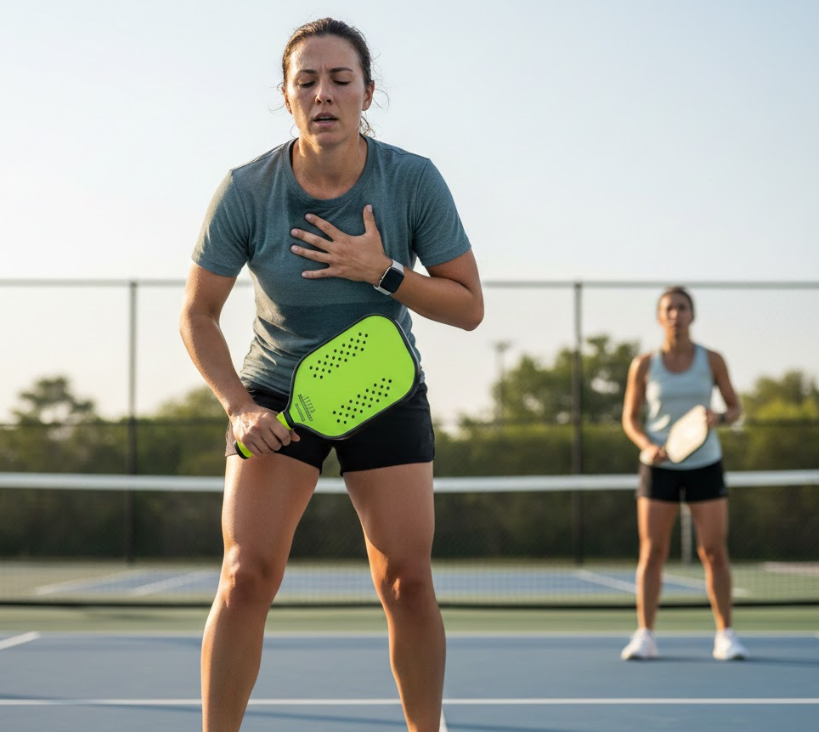
You’re two games into a rally-heavy match, your heart’s pounding like a jackhammer, and your opponent is already bouncing on their toes ready to serve. Again. You just want three seconds to breathe, but they’re treating this like the US Open finals.
Sound familiar?
Here’s the truth: pickleball matches can get sneakily fast. One minute you’re casually dinking at the kitchen, the next you’re in a frantic firefight that has your Apple Watch sending you concerned notifications. And when momentum swings—especially when it swings against you—some opponents will try to rush you, serving quickly to keep you flustered and off-balance.
But you don’t have to let them control the pace. There are plenty of legal, tactical ways to steal a few precious seconds, calm your nervous system, and get back in control of the match. Some are obvious. Others are delightfully sneaky. All of them work.
Why Your Heart Rate Actually Matters in Pickleball
Before we dive into the tactics, let’s talk about why this even matters. When your heart rate spikes too high for too long, several things happen—and none of them help your game:
- Your decision-making gets sloppy. Research from the American Heart Association shows that when you’re operating at 90-95% of your max heart rate, your brain prioritizes survival over strategy. That means you’ll make rushed, impulsive shot selections instead of smart ones.
- Your hands get shaky. Ever notice your volleys getting erratic when you’re gassed? That’s adrenaline and fatigue creating micro-tremors in your muscles.
- Your breathing gets shallow. When you’re gasping for air, you can’t get enough oxygen to your muscles. This creates a vicious cycle where you get more tired, which makes you breathe harder, which makes you more anxious.
According to Mayo Clinic research on athletic performance, even dropping your heart rate by 10-15 beats per minute during rest periods can significantly improve your endurance and focus for the next rally.
So yeah—learning how to steal a few seconds and calm yourself down isn’t just about comfort. It’s about winning.
The Legal Time-Buying Tactics (Use These Shamelessly)
The rulebook gives you more wiggle room than you think. Here are the perfectly legal ways to buy yourself some recovery time:
1. The 10-Second Rule Is Your Friend
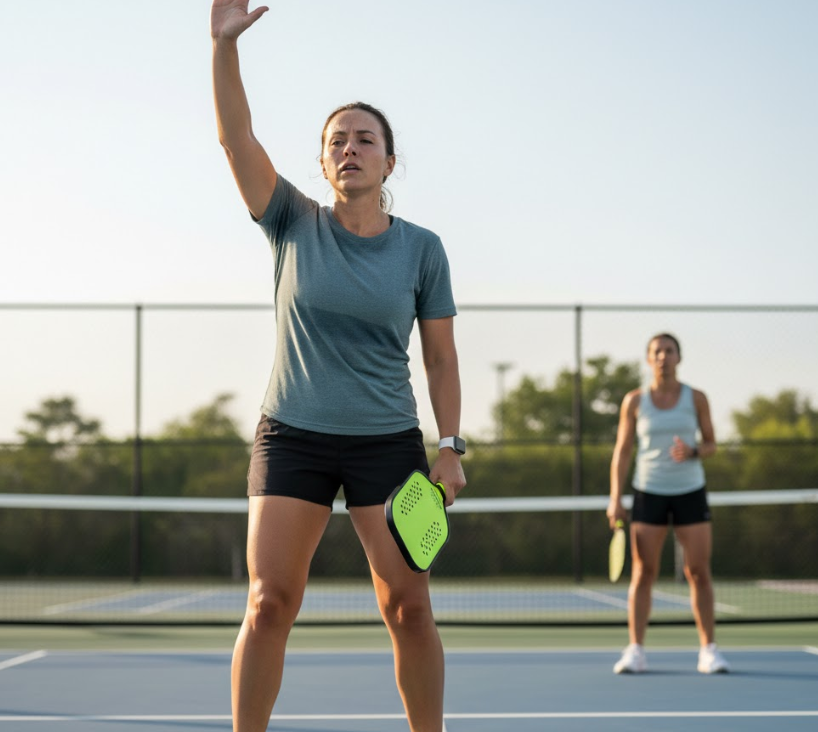
You have 10 seconds to serve after the score is called. Not 5 seconds. Not “whenever you’re ready.” A full 10 seconds. If someone is rushing you, calmly remind them (or yourself) that you’re within the rules. Use every second.
2. Call a Time-Out
Each team gets two time-outs per game (one in rally scoring). These are 60-second resets where you can:
- Walk to your bag, drink water, and breathe deeply
- Wipe your paddle grip and face
- Chat with your partner about strategy (or just give yourself mental space)
- Let your heart rate come down 15-20 beats
Don’t save your time-outs for “emergencies.” Use them strategically when you feel the pace getting away from you. Taking a timeout at 6-3 when you’re down is smarter than waiting until 10-5.
3. Medical or Equipment Time-Outs
If your shoe comes untied, your paddle grip feels off, or you genuinely need to address something physical, you can request a brief equipment adjustment. Don’t abuse this—but don’t ignore it either. If your shoe is legitimately untied, take the 20 seconds to fix it properly while doing some deep breathing.
4. Between-Game Breaks
You get up to 2 minutes between games. Use them. Sit down. Close your eyes. Practice box breathing (more on that below). Don’t stand at the baseline bouncing impatiently—you’re just keeping your heart rate elevated.
The Sneaky (But Legal) Ways to Buy Seconds
These are the tactical moves that competitive players use to subtly control the pace without technically breaking any rules. They’re not dirty—they’re smart.
5. Roll the Ball Off Your Foot
You mentioned this one, and it’s brilliant. When the ball comes to you and you’re not quite ready to serve, don’t pick it up immediately. Let it roll to your foot, trap it gently, then bend down to retrieve it. Boom—you just bought yourself 3-4 extra seconds.
The key is making it look natural. Don’t theatrically fumble the ball. Just let physics do its thing while you compose yourself.
6. The “Oops, Wrong Ball” Switcheroo
If you have multiple balls on your side (which happens in rec play), you can casually inspect the ball, decide it’s “not the good one,” and swap it out. This buys you another 5-6 seconds. Again, don’t overdo this, but in a pinch, it works.
7. Walk to the Baseline Slowly
After a long rally, don’t sprint back to serving position. Walk deliberately. Pick up the ball. Examine your paddle grip. Adjust your hat. You’re not stalling—you’re being methodical.
8. Ask to Check the Score
If there’s any ambiguity about the score—even slight—you can ask for clarification. This forces a pause while everyone confirms. In tournament play with a ref, this is easy. In rec play, it might feel awkward, but it’s totally within your rights.
9. The “Foot Fault Check”
Reposition yourself behind the baseline very deliberately, making sure both feet are clearly behind the line. Maybe even take a small step back, reset your stance, and bounce on your toes a couple times. You’re not stalling—you’re preventing a foot fault. Very conscientious of you.
The Breathing Techniques That Actually Work
All the time-buying in the world doesn’t matter if you don’t know how to actually calm your body down. Here are the techniques that work fastest on the court:
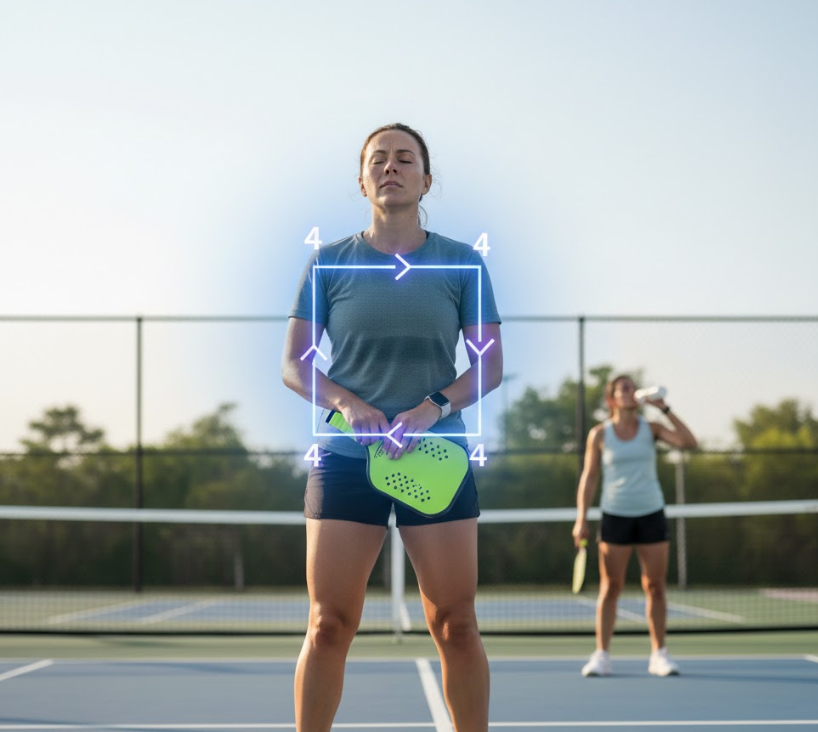
10. Box Breathing (4-4-4-4)
This is what Navy SEALs use to stay calm under stress, and it’s perfect for pickleball. The pattern is:
- Breathe in through your nose for 4 counts
- Hold for 4 counts
- Exhale through your mouth for 4 counts
- Hold empty for 4 counts
- Repeat
You can do this while bouncing the ball before your serve, during a time-out, or between games. According to research from the Harvard Medical School, controlled breathing activates your parasympathetic nervous system, which literally tells your body to calm down.
Even one cycle of box breathing can drop your heart rate by 5-10 beats. Do it three times and you’ll feel noticeably calmer.
11. The Extended Exhale
If you don’t have time for full box breathing, just make your exhales longer than your inhales. Breathe in for 2 counts, breathe out for 4 counts. This still triggers the relaxation response and is easier to do quickly.
12. Shoulder Drops and Head Rolls
While you’re doing your breathing, add some physical relaxation cues:
- Roll your shoulders back and down (tension loves to hide in your traps)
- Do a slow head roll to release neck tension
- Shake out your hands and arms like you’re flicking water off them
- Bounce lightly on your toes to reset your leg muscles
These micro-movements tell your brain “we’re not in danger anymore” and help reset your nervous system.
Mental Tactics to Keep Your Cool
Sometimes the heart rate spike isn’t just physical—it’s mental. Here’s how to keep your head in the game when things get intense:
Focus on the Process, Not the Score
When you’re thinking “oh god, they’re about to win,” your brain floods with stress hormones. Instead, focus on one thing: “I’m going to take three deep breaths and hit my next serve deep to the backhand.”
Process goals calm you down. Outcome obsession amps you up.
Use a Physical Reset Cue
Develop a ritual that signals to your brain “we’re resetting now.” This could be:
- Tapping your paddle against your thigh twice
- Tugging your shirt hem
- Adjusting your visor or headband
- Taking one big breath and blowing it out forcefully
Elite athletes use these “reset buttons” all the time. You’ll see tennis players bounce the ball exactly five times before serving, or basketball players spin the ball three times before a free throw. It’s not superstition—it’s creating a neural pattern that says “this is where I regain control.”
Remember: They’re Tired Too
Your opponent is probably just as gassed as you are. The difference is they might be better at hiding it—or they might be trying to rush you because they need the point to end quickly.
Don’t let their urgency become your urgency. Play your game at your pace.
What NOT to Do
Let’s be clear about what crosses the line from “tactical time management” to “actual stalling”:
- Don’t fake injuries. If you’re genuinely hurt, take the medical timeout. If you’re not, don’t pretend. It’s poor sportsmanship and you’ll get called out.
- Don’t repeatedly question line calls without cause. Disagreeing about one close call is fine. Questioning every third ball is obnoxious.
- Don’t take longer than 10 seconds to serve. The ref can issue a warning, and in tournament play, you can lose the rally.
- Don’t use bathroom breaks as strategic timeouts. If you genuinely need to go, fine. But disappearing for a 5-minute “bathroom break” when you’re down 8-2 is transparent and frowned upon.
Building Long-Term Stamina (So You Don’t Need to Catch Your Breath as Often)
All these tactics are great for managing your heart rate in the moment, but the real solution is improving your cardiovascular fitness so you don’t get as winded in the first place.
Here’s what works:
- Play more pickleball. Sounds obvious, but the best conditioning for pickleball is pickleball. Try to play 3-4 times per week if you can.
- Add interval training. Do 30-second sprints followed by 90 seconds of rest. This mimics the rally-rest-rally pattern of pickleball better than steady-state cardio.
- Don’t skip the warm-up. Five minutes of dynamic stretching and light movement before you play gets your heart rate up gradually instead of shocking your system.
- Improve your footwork efficiency. The more efficiently you move on the court, the less energy you waste. Check out our guide on proper court positioning to reduce unnecessary running.
Final Thoughts
Pickleball is supposed to be fun, but it’s hard to have fun when you feel like your lungs are about to explode. Learning how to manage your heart rate—whether through legal time-buying, breathing techniques, or just better fitness—is one of the most underrated skills in the game.
Your opponents might try to rush you. The momentum might swing wildly. The rallies might go long. But you don’t have to let the pace of the game dictate your body’s response.
Take your 10 seconds. Roll the ball off your foot. Do your box breathing. Reset your shoulders. And then step up to the baseline calm, composed, and ready to play your game.
Because in the long haul, the player who can stay calm under pressure is the one who’s still standing when the match gets tight.
Now if you’ll excuse me, I need to go practice rolling a ball off my foot. For science.

Drew Pierce is a USA Pickleball Ambassador, PPR certified coach, and tennis crossover who covers beginner tips, paddle releases, and the sport’s growing culture. Read more on his About page or tune into Pickle Rock Radio.