
Last Updated on February 8, 2026 by Drew Pierce
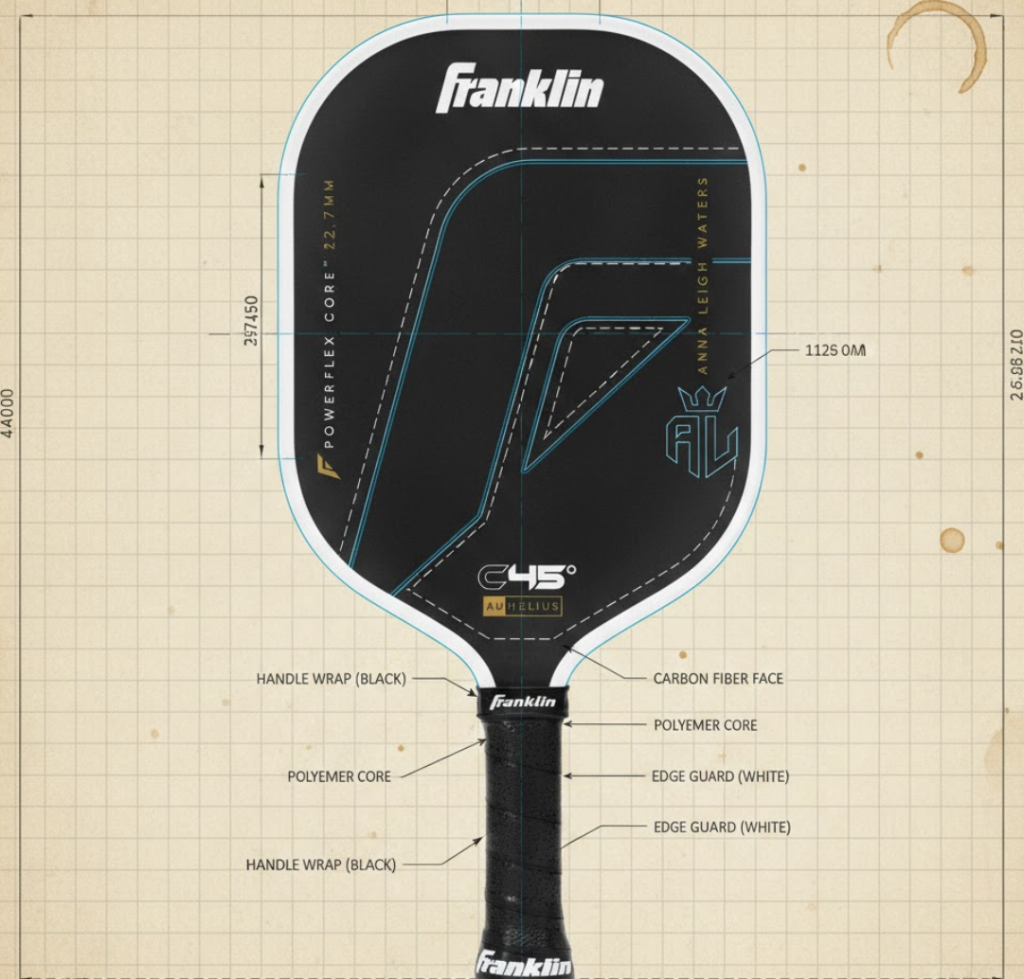
Anna Leigh Waters’ signature Franklin Aurelius paddle officially received UPA-A certification on February 6, 2026, fast-tracking its debut for the PPA Cape Coral Open. While Waters will compete with the highly aggressive 12.7mm model, the paddle is available for pre-order in three core thicknesses (12.7mm, 14mm, 16mm) and ships starting March 1, 2026. This certification marks a major shift in the paddle market, as Franklin cements its new flagship partnership following the departure of JW and Jorja Johnson.
In case you missed it while scrolling through your feed yesterday, there was a small but significant announcement in the professional pickleball world: Anna Leigh Waters’ signature Franklin paddle, the Aurelius, received UPA-A certification on Friday, February 6th. For most recreational players, this might seem like inside baseball. But if you care about where professional pickleball is heading—or if you’re one of the thousands already eyeing this paddle for yourself—this approval is a bigger deal than it first appears.
Let’s break down what just happened, why it matters, and what it tells us about the current state of paddle technology and player equipment deals.
The Quick Facts: What Got Approved and When
The Franklin Aurelius received UPA-A approval on February 6th, exactly one month after Waters announced her long-term deal with Franklin Sports. The paddle is available for pre-order now and ships starting March 1st.
The Aurelius comes in three core thicknesses: 16mm, 14mm, and 12.7mm. Waters will be playing with the 12.7mm version, which is the thinnest option and—by the physics of paddle design—the poppiest. For context, that’s thinner than most Gen 3 thermoformed paddles on the market, which typically cluster around 14mm-16mm.
The paddle is part of Franklin’s C45 Carbon Fiber line, joining the Dynasty (elongated), Hybrid, and Tempo (widebody) models. Other top pros using C45 paddles include Parris Todd, Hayden Patriquin, Will Howells, and Megan Fudge. Until recently, JW and Jorja Johnson were also Franklin-sponsored, though they announced their departure from the brand on the same day Waters’ deal was revealed.
Here’s the technical rundown on the Aurelius, straight from Franklin’s product page.
Construction: Double thermoformed unibody design with reinforced structure to reduce vibration Surface: T700 carbon fiber with 45-degree peel ply texture for consistent grit and spin Core: PowerFlex polymer core with inner foam layer (12.7mm, 14mm, or 16mm options) Handle: Traditional 5.1-inch length, 3.9-inch circumference Weight: 7.2oz to 8.0oz depending on thickness Shape: Widebody, designed specifically for Waters’ playing style
The official tagline? “The official shape chosen by Anna Leigh Waters, designed to support high-level competitive play.” Marketing speak, sure, but also accurate—this paddle was built around how the world’s #1 women’s player actually plays the game.
Need a break from the court?
I wrote a short story called "Dropkicks and Dinks" about a pro-wrestler finding solace in pickleball. It's featured in my new collection.
Get it on Amazon →Why the 12.7mm Thickness Is Interesting (and Risky)
Let’s talk about that 12.7mm core for a second, because it’s the most intriguing spec on this paddle.
In the current landscape of thermoformed Gen 3 paddles, 14mm has become the sweet spot for most pros. It balances power and control, offers decent touch at the kitchen, and provides forgiveness on off-center hits. Going down to 12.7mm makes a clear statement: Waters is prioritizing pop and offensive firepower over margin for error.
Thinner paddles rebound faster. Physics doesn’t care about your feelings—less material between the ball and the carbon surface means more energy transfer back to the ball. That translates to more pace on drives, quicker counter-punches, and explosive put-aways.
But there’s a trade-off. Thinner cores also mean less forgiveness. Hit the ball slightly off-center or with late timing? A 16mm paddle might bail you out. A 12.7mm paddle will punish you. For Waters, who has some of the best hands in the sport and rarely mishits anything, that trade-off makes sense. For a 4.0 recreational player buying this paddle because it has ALW’s name on it? You might be in for a reality check.
This is exactly the kind of spec choice that separates true signature paddles from generic celebrity endorsements. Waters isn’t slapping her logo on a paddle Franklin was already making. She’s playing a configuration built around her specific strengths: elite hand speed, offensive aggression, and the ability to generate pace from anywhere on the court.
The Timeline Tells the Real Story
Here’s what’s fascinating about the timeline of this whole deal:
December 31, 2025: Waters’ seven-year contract with Paddletek expires. She and her mother Leigh Waters had been with Paddletek since Anna Leigh turned pro in 2019 at age 11. The Paddletek Bantam ALW-C was co-designed with Waters and became one of the most popular paddles in the sport.
January 8, 2026: Franklin Sports announces a long-term partnership with Waters. The announcement includes imagery of her holding an unreleased C45 model called the Aurelius (a Latin word meaning “golden,” which ties nicely to her crown logo branding).
January 12-18, 2026: Waters competes at the PPA Masters in Palm Springs using an existing approved C45 model, since the Aurelius wasn’t yet certified.
January 16, 2026: Pre-orders open for the Aurelius.
February 6, 2026: UPA-A approval granted.
March 1, 2026: Paddles ship to customers.
Think about that. From contract announcement to approved signature paddle in less than a month. Either Franklin had this paddle deep in development before the deal was announced (likely), or they fast-tracked the approval process knowing they needed Waters playing with her signature model ASAP (also likely).
The fact that pre-orders opened ten days before approval was granted tells you Franklin was confident this was getting approved. That level of coordination between a paddle manufacturer and the governing bodies is… interesting. Not necessarily shady, but definitely worth noting.
What This Deal Tells Us About the Paddle Market
Let’s zoom out for a second and talk about what Waters signing with Franklin means for the broader paddle industry.
When Ben Johns left Franklin for JOOLA in 2022, it was a massive blow to Franklin’s brand cachet. Johns was the face of Franklin pickleball for years, and his signature paddle—originally priced at $100, which is wild to think about now—was everywhere on recreational courts.
Franklin pivoted to JW and Jorja Johnson as their marquee names, along with rising stars like Hayden Patriquin and Parris Todd. All great players, all solid ambassadors. But let’s be honest: none of them have the star power of Anna Leigh Waters.
Waters gets more national media attention than all other pros combined. She’s thrown out first pitches at Cubs games, appeared on ESPN’s SportsCenter, and had her face on billboards in Times Square. She has 181 career gold medals and 39 triple crowns. She’s the undisputed face of women’s professional pickleball and one of the two or three most recognizable figures in the entire sport (alongside Ben Johns and maybe Jack Sock).
Landing Waters gives Franklin back what they lost when Johns left: a transcendent star who can be the face of the brand for the next decade. Waters just turned 19. If she plays for another 10-15 years at this level—and there’s every reason to think she will—Franklin just locked in their flagship athlete through the prime growth years of professional pickleball.
The contract is reportedly worth “millions of dollars.” Exact figures haven’t been disclosed, but industry sources suggest Franklin was willing to spend more than anyone else. JOOLA has big money tied up in Ben Johns’ lifetime deal. Selkirk is paying Jack Sock handsomely to be their face. Franklin clearly decided Waters was worth paying top dollar to secure.
And it makes sense. Waters isn’t just a player; she’s a marketing engine. Every paddle she uses becomes the most scrutinized piece of equipment in the sport. Recreational players will buy the Aurelius in droves, even if the 12.7mm version isn’t right for their game, simply because it’s what she plays with.
The Tech Specs: Is This Actually a Good Paddle?
Look, I’m not here to shill for Franklin or pretend this is the second coming of paddle technology. But based on the specs and Franklin’s track record with the C45 line, the Aurelius looks legitimately good.
The C45 series has been in multiple “Top 10 Paddles” lists since its release. Franklin has consistently stayed at or near the top of the paddle technology curve for the past five years. The original Ben Johns signature paddle was one of the grittiest paddles available at the time. The current C45 line competes toe-to-toe with JOOLA, Selkirk, and other premium brands.
The double thermoformed unibody construction is smart engineering. Thermoforming the paddle twice reinforces the structure and reduces vibration, which translates to a more solid feel and better energy transfer. The 45-degree carbon fiber peel ply texture maximizes spin potential while maintaining consistent grit across the face.
The PowerFlex polymer core with an inner foam layer is where things get interesting. Foam injection in the core adds structural stability while increasing “pop”—that satisfying rebound you feel on drives and volleys. Combined with the 12.7mm thickness, this paddle is built for offense.
The premium wrap grip with absorption and tackiness is table stakes for any $200+ paddle, but it’s worth noting Franklin didn’t cheap out on the handle.
Will this be the best paddle on the market? That’s subjective and depends on your playing style. But will it be competitive with the best Gen 3 thermoformed paddles? Absolutely. Franklin wouldn’t put their biggest signing in years on a paddle that underperforms.
What About the JW and Jorja Johnson Situation?
Here’s where things get a little awkward. On the same day Franklin announced Waters’ signing, JW and Jorja Johnson announced they were leaving Franklin.
The timing wasn’t coincidental. When you’re bringing in the biggest star in the sport, you’re allocating resources, marketing dollars, and brand focus toward that player. The Johnsons are great players—no question—but they don’t have Waters’ mainstream appeal or media presence.
This is the reality of professional sports sponsorships. Brands have finite budgets. When you spend millions on one athlete, something has to give elsewhere. The Johnsons likely saw the writing on the wall: with Waters as Franklin’s centerpiece, they weren’t going to get the same level of support or product development priority.
It’ll be interesting to see where JW and Jorja land. They’re both talented enough to command serious offers from other brands. But the optics of their departure—announced simultaneously with Waters’ arrival—tell you everything about the pecking order in sports marketing.
Should You Buy the Aurelius?
Alright, let’s get practical. If you’re a recreational player reading this and thinking about pre-ordering the Aurelius, here’s my advice:
Buy the 12.7mm if: You have elite hand-eye coordination, you play offensively, you rarely mishit balls, and you want maximum pop on drives and put-aways. This is a paddle for 5.0+ players who can handle the reduced forgiveness.
Buy the 14mm if: You want a balance of power and control, you’re a strong 4.5-5.0 player, and you want something closer to the mainstream Gen 3 paddle experience.
Buy the 16mm if: You prioritize touch and control over raw power, you play a lot at the kitchen, or you’re a 4.0-4.5 player who wants a paddle that forgives mistakes.
Don’t buy any version if: You’re buying it solely because Anna Leigh Waters uses it. Pro paddles are designed for pro-level skills. A signature paddle won’t magically give you Anna Leigh’s hands or court positioning.
The price point will likely be around $200-$220, which is standard for premium thermoformed paddles. That’s a lot of money…but still not cracking our list of the most expensive pickleball paddles. Make sure you’re buying it because the specs match your game, not because of the name on the face.
The Bigger Picture: Paddle Deals and Player Power
Here’s what this whole situation really tells us: professional pickleball has reached a level of maturity where equipment deals are make-or-break for both players and brands.
Waters switching from Paddletek to Franklin sent shockwaves through the industry. Paddletek lost their most valuable athlete. Franklin gained a generational star. And the financial stakes are now high enough that brands are willing to pay millions to secure the right player.
This is good for the sport. It means there’s real money in pickleball—not just participation fees and tournament prizes, but corporate sponsorship dollars and equipment contracts that can set players up for life. It also means the best players have leverage. They can negotiate, demand certain contract terms, and choose partners that align with their long-term goals.
Waters mentioned in her announcement that international growth was a key factor. Franklin has been aggressive about expanding globally—Parris Todd and Hayden Patriquin recently did promotional tours in Malaysia. If Waters becomes the face of Franklin’s international push, that’s smart positioning for both parties.
Final Thoughts: Approval Granted, Game On
So Anna Leigh Waters’ signature paddle is approved. She’ll be playing with it at the PPA Cape Coral Open next week (February 9-15), and recreational players will start receiving their pre-orders on March 1st.
This is a significant moment in equipment history. The sport’s most dominant active player just switched brands and got her signature paddle approved in record time. Franklin has reclaimed its position as a destination brand for elite players. And thousands of 4.0 players are about to discover whether they can handle a 12.7mm paddle designed for someone with infinitely better hands than they have.
Welcome to the Aurelius era. Let’s see if the paddle lives up to the hype.

Drew Pierce is a USA Pickleball Ambassador, PPR certified coach, and tennis crossover who covers beginner tips, paddle releases, and the sport’s growing culture. Read more on his About page or tune into Pickle Rock Radio.