
Last Updated on March 3, 2026 by Drew Pierce
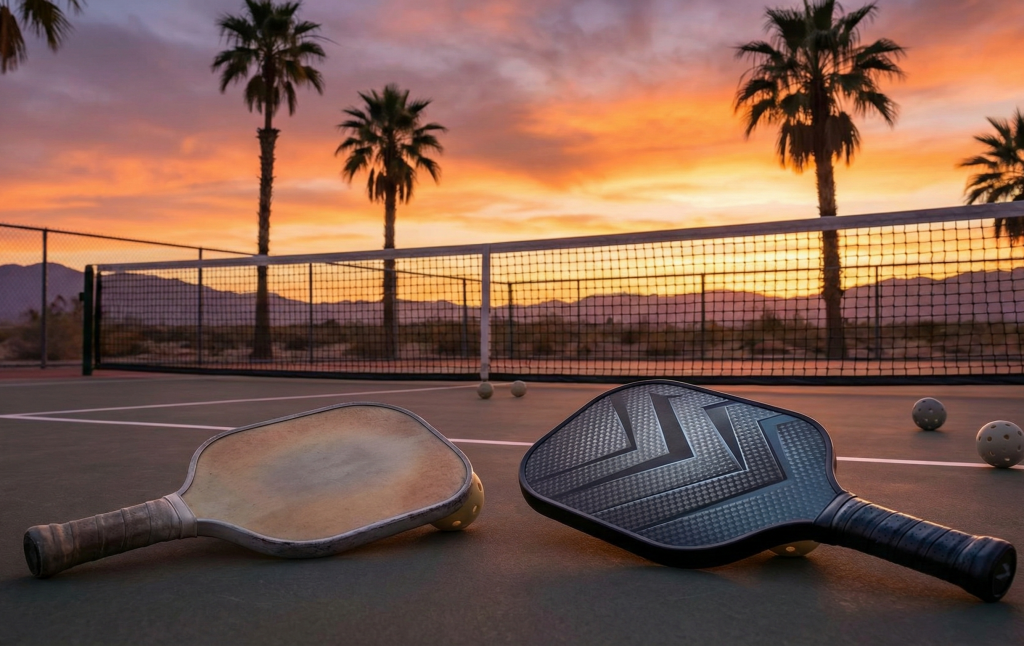
Happy New Year, pickleball fam! Ace here, writing to you from a gorgeous January week in Austin where the courts have been absolutely packed with people working off their holiday cookie guilt. There’s something special about the first week of a new year in pickleball—fresh goals, new gear under the tree, and that optimistic feeling that this will be the year you finally master the two-handed backhand. For the pros, 2026 officially kicked off this week with the PPA Masters in Palm Springs, and for the entire pickleball community, we’re confronting a serious problem that’s been growing in the shadows: counterfeit paddles. Let’s dive in.
The PPA Masters: 2026 Season Begins in the Desert
The professional season is underway with the PPA Masters in Palm Springs, running January 12-18 at Mission Hills Country Club in Rancho Mirage. This is one of just two “Slam” events on the PPA Tour this season (the other being the Veolia Atlanta Pickleball Championships in late April), and it’s drawing over 1,400 registered players competing alongside the top pros in the world.
What makes this event particularly interesting is the restructured 2025-26 PPA season format. The tour now runs through May, culminating with the PPA Finals at Life Time Rancho San Clemente May 4-10, after which Major League Pickleball takes over through August. It’s a cleaner calendar that lets fans follow both tours more easily without the constant overlap and scheduling chaos we’ve seen in previous years.
For amateur players, the Masters offers that rare opportunity to compete at the same venue where Anna Leigh Waters, Ben Johns, and Federico Staksrud are battling for championship points—what the PPA markets as “Play Where the Pros Play.” And honestly? If you’ve never done a PPA event as an amateur, I highly recommend it. The atmosphere, the professionalism, the chance to watch world-class pickleball between your own matches—it’s worth the entry fee.
One storyline I’m watching: how the new Life Time ball performs in a desert climate for a full week of high-level competition. Ball choice matters more than most recreational players realize, and the PPA’s switch to Life Time balls has been one of the more significant equipment changes of the past year.
The Counterfeit Paddle Crisis: An “Existential Threat” to the Sport
If you haven’t been paying attention to this issue, now’s the time to start. Counterfeit paddles have become a massive problem, and the sport’s biggest organizations—USA Pickleball, PPA Tour, APP Tour, MLP, DUPR, UPA-A, and the World Pickleball Federation—just released a joint statement declaring there’s “no room for counterfeit paddles in the sport.”
Here’s the scope: within weeks of major brands like CRBN launching their TruFoam paddle (after 18 months of R&D and 200+ prototypes), knockoffs flooded sites like Alibaba, Temu, and Facebook Marketplace for as little as $17. We’re talking about convincing fakes of JOOLA, Selkirk, CRBN, Six Zero—paddles that look nearly identical to the real thing but are made from inferior materials, never passed USA Pickleball testing, and could perform wildly differently (often hotter) than certified equipment.
Jason Aspes, president of the UPA-A, recently bought what was advertised as a JOOLA Perseus Pro IV on Walmart’s website for $129.99. When it arrived, it was a well-disguised clone that would fool most players. That’s the problem—these aren’t just obvious fakes anymore. They’re sophisticated counterfeits infiltrating mainstream retail platforms.
Why does this matter? Three reasons:
- Safety and fairness: These paddles haven’t been tested or certified. In a sport where we stand 14 feet apart, an uncertified paddle playing significantly hotter than allowed is a legitimate safety concern.
- Tournament integrity: Amateur tournaments are being infiltrated with illegal equipment, creating unfair competitive advantages.
- Innovation dies: When brands spend two years perfecting foam core technology only to see knockoffs hit the market weeks later, it kills the incentive to invest in real R&D. The counterfeiters profit from innovation they didn’t create.
The UPA-A has launched a public service campaign called “Don’t Trust A Fake” featuring pro players in absurd alternate professions (Federico Staksrud as a surgeon, for instance) with the tagline highlighting how you wouldn’t trust a fake professional, so why trust a fake paddle? It’s clever, and the message is serious: buy from authorized dealers or directly from brands. If a deal seems too good to be true, it probably is.
2026 Paddle Predictions: What’s Next After the Foam Revolution?
Speaking of paddles, I’m always curious about what’s coming next in paddle technology. The Dink just published predictions from top paddle reviewers for what we’ll see in 2026, and there’s a consensus forming: this will be the year of durable grit and foam refinement.
After 2025’s “Gen-4 foam core revolution” (where pretty much every major brand released full-foam paddles), 2026 looks like a consolidation year. Here’s what the experts are expecting:
Durable grit surfaces: The number one trend. Now that foam cores have solved the durability and consistency issues of traditional polypropylene cores, the weak link is surface texture degradation. Expect brands to focus heavily on grit that maintains spin characteristics for the paddle’s entire lifespan.
Foam density experimentation: Brands will get more sophisticated about mixing different foam types and densities within a single paddle. Think denser foam near the perimeter to increase twist weight and expand the sweet spot, with softer foam in specific zones for better feel. Materials like MPP, Pebax, TPU, and silicone foam will all get their moment.
A “power recession” for recreational play: This is my favorite prediction. After years of max-power paddles dominating the market (and getting banned by USA Pickleball’s PBCoR test), recreational players are realizing that ultra-hot paddles don’t actually help their game. Expect a shift back toward all-court paddles that prioritize control and touch. As one reviewer put it, “most recreational players play their best ball with lower-power paddles.”
Sensor technology (fingers crossed): This is the long-shot hope—accelerometers and gyroscopes built into paddles or as attachments that give you personalized data on swing characteristics, impact consistency, and stroke mechanics. Every major sport has performance tracking tech; why not pickleball?
One thing’s for sure: the innovation isn’t slowing down. And honestly, for a 4.5 player like me who’s been using the same paddle setup for two years, it’s getting harder to resist the temptation to try something new.
The Big Picture: A Sport Growing Up
As we kick off 2026, I can’t help but reflect on how much pickleball has matured in just the past 18 months. We’ve got professional leagues with coherent schedules, international governing bodies working together on equipment standards, and legitimate concern about protecting intellectual property and competitive integrity.
These aren’t the problems of a niche hobby—they’re the growing pains of a legitimate sport. And while issues like counterfeit equipment are frustrating, they’re also signs that pickleball matters enough for bad actors to try and exploit it.
So here’s my challenge to you as we start this year: support the real thing. Buy from authorized dealers. Play with legal equipment. If you see someone showing off their “$30 Selkirk” they got on Temu, have the conversation about why that matters. The future of this sport we love depends on all of us treating it with the seriousness it deserves.
Now get out there and play some pickleball. I’ll see you on the courts.
— Ace
