
Last Updated on November 5, 2026 by Drew Pierce
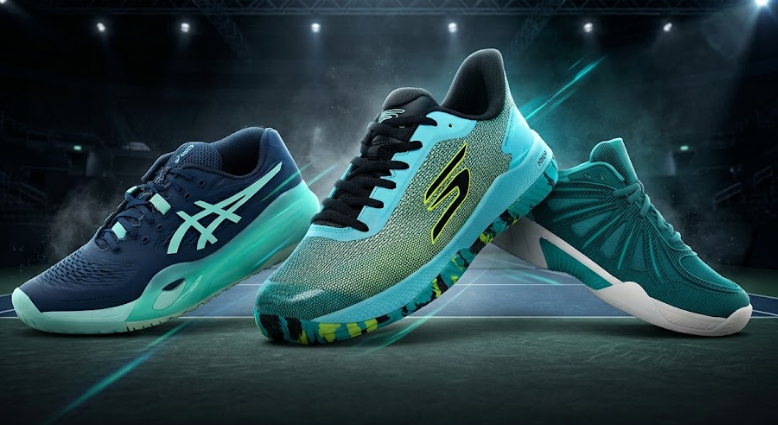
The best pickleball shoes for wide feet, knee pain, plantar fasciitis, outdoor courts and players who would rather spend their money on another paddle.
I’ve spent a ridiculous amount of time researching pickleball paddles. Carbon fiber. Core thickness. Swing weight. Spin. Power. Control. All the things that make you believe your next $200 purchase will magically improve your game.
And then there’s footwear.
Not nearly as exciting.
But considering how much time I spend chasing balls, moving laterally and attempting to recover from shots I had absolutely no business going after, I’m starting to think shoes deserve a little more attention.
You can have the greatest paddle on the planet, but it’s not going to help much if you’re sliding around the court in a pair of running sneakers.
The 30-Second Summary: What Are the Best Pickleball Shoes of 2026?
The best pickleball shoes provide lateral stability, reliable court traction, secure heel support and an outsole designed for the surface you’re playing on. Unlike running shoes, which are primarily engineered for forward movement, proper court shoes are designed to handle the quick side-to-side movements, stops, pivots and lunges that make pickleball so much fun.
For most recreational outdoor players, I’d start with the Skechers Viper Court Pro 2.0. Players needing a genuine wide fit should consider the K-Swiss Express Light Pickleball 2E, while the ASICS GEL-RESOLUTION X is worth a look for players prioritizing cushioning and lateral support.
The best shoe, however, is the one that actually fits your foot and gives you a stable platform for playing.
Revolutionary advice, I know.
Best Pickleball Shoes of 2026: Quick Comparison
| Category | Top Shoe Pick | Key Feature | Approximate Price |
|---|---|---|---|
| Best Overall | Skechers Viper Court Pro 2.0 | Goodyear rubber outsole, Arch Fit support | $100–$120 |
| Best for Wide Feet | K-Swiss Express Light Pickleball 2E | Genuine 2E wide sizing, supportive midfoot | $100–$115 |
| Best for Cushioning & Knee Comfort | ASICS GEL-RESOLUTION X | FF BLAST PLUS ECO heel cushioning, DYNAWALL stability | $120–$160 |
| Best for Arch Support | K-Swiss Hypercourt Express 2 | Supportive platform, removable insole, roomy fit | $110–$130 |
| Best Budget Shoe | ASICS GEL-DEDICATE 9 PICKLEBALL | TRUSSTIC stability, court-specific design | $80–$90 |
Prices are approximate U.S. retail ranges checked in November 2026. They vary by color, size, retailer and availability. These are feature-based editorial recommendations, not a claim that I personally performed controlled testing of every model.
Top Pickleball Shoes of 2026
Best Overall Pickleball Shoe: Skechers Viper Court Pro 2.0
Best for: Recreational and competitive players who want a comfortable, supportive outdoor court shoe without going overboard on price.
<escape></escape>Why it makes the list: Skechers has become a legitimate name in pickleball footwear, and the Viper Court Pro 2.0 offers a compelling mix of comfort, traction and court-specific design.
Remember when Skechers was primarily associated with comfortable walking shoes?
Well, they’ve apparently decided to take pickleball seriously.
The Viper Court Pro 2.0 features a Goodyear Gold rubber outsole, which is designed for grip, durability and controlled court movement. There’s also Skechers’ removable Arch Fit insole and ULTRA GO cushioning.
I’m particularly interested in the Relaxed Fit design, which provides extra room around the toes and forefoot. When you’re spending a couple of hours playing doubles, having your toes compressed like they’re packed into a rush-hour subway car isn’t ideal.
The shoe also has a reinforced toe guard and a breathable mesh upper.
Specifications
- Weight: Skechers does not publish a consistent official per-shoe weight; verify the figure for your size if weight is a priority.
- Heel-to-toe drop: Not officially specified. The advertised heel height is not the same thing as heel-to-toe drop.
- Outsole warranty: No six-month outsole durability guarantee verified for this model.
| Pros | Cons |
|---|---|
| Goodyear rubber designed for court traction | No published official drop specification |
| Arch Fit removable insole | Relaxed Fit isn’t the same as true 2E or 4E sizing |
| Roomier forefoot | May not satisfy players preferring an especially firm, minimal court feel |
| Breathable upper and toe protection | No verified six-month outsole warranty |
My take: If you’re playing recreational doubles several times a week and want one solid shoe to start with, this would be near the top of my shopping list.
View Skechers Viper Court Pro 2.0
Best Pickleball Shoes for Wide Feet: K-Swiss Express Light Pickleball 2E
Best for: Players whose feet feel squeezed in standard-width court shoes.
Let’s talk about wide feet.
Not everybody has feet shaped like the narrow, suspiciously symmetrical models depicted in shoe advertisements.
Some of us need ROOM.
And while a manufacturer describing a shoe as “roomy” sounds promising, that isn’t necessarily the same as offering a genuine wide size.
That’s why I’m highlighting the K-Swiss Express Light Pickleball in its dedicated 2E wide version.
It features K-EVA cushioning, a supportive midfoot chassis, a durable Aosta rubber outsole and additional toe protection.
The wider forefoot can be particularly important for players who develop rubbing or blisters along the sides of their toes.
However, a wide shoe shouldn’t be loose everywhere. You still want your heel and midfoot held securely during lateral movement.
Specifications
- Weight: Approximately 12.4 ounces per shoe in men’s size 10.5 for the original Express Light 2E; the newer Express Light 2 2E is listed around 10.9 ounces in men’s size 9. These are different versions and sample sizes.
- Heel-to-toe drop: No reliably verified manufacturer specification.
- Outsole warranty: No six-month outsole durability guarantee verified.
| Pros | Cons |
|---|---|
| True 2E wide option | Not necessarily wide enough for players requiring 4E |
| Midfoot support for side-to-side movement | Not the most heavily cushioned shoe |
| Durable rubber outsole and toe protection | No verified six-month outsole warranty |
| Designed specifically for pickleball | Version and width availability vary |
My take: If you have wide feet, start with actual wide sizing rather than buying a standard shoe one size too long. Your toes may appreciate the extra room, but your heel probably won’t appreciate swimming around inside the shoe.
Also worth considering: The New Balance FuelCell 996v6, which is offered in a 2E width and provides a performance-oriented court design. Check the exact width offering before ordering; don’t assume every New Balance tennis shoe comes in 4E.
View K-Swiss Express Light Pickleball 2E
Best Pickleball Shoes for Knee Pain & Cushioning: ASICS GEL-RESOLUTION X
Best for: Players who prioritize a supportive, cushioned platform for long hard-court sessions.
Hard courts are unforgiving.
The court doesn’t particularly care whether you’re 25 or 55. If you jump, stop, lunge or land awkwardly, it’s not going to offer much sympathy.
That’s one reason cushioning becomes an important consideration when choosing pickleball shoes.
The ASICS GEL-RESOLUTION X is a stability-focused tennis shoe that also makes sense for outdoor pickleball.
It features FF BLAST PLUS ECO foam under the heel, a two-piece midsole and DYNAWALL support extending around the heel to improve stability during lateral movement.
The DYNALACING system also helps secure the foot during quick transitions.
What I like about the design is that ASICS hasn’t simply stuffed a bunch of soft foam under your feet and called it a day.
Cushioning is important. But so is stability.
Specifications
- Weight: Approximately 15 ounces per shoe in men’s size 9, based on an independently published review.
- Heel-to-toe drop: No consistently verified official figure for this model.
- Outsole warranty: A six-month outsole durability guarantee is reported by established tennis footwear reviewers; verify eligibility and terms before purchase.
| Pros | Cons |
|---|---|
| Substantial cushioning under the heel | Heavier than many lightweight court shoes |
| DYNAWALL technology for lateral stability | Premium price |
| Secure lacing system | Fit may require some adjustment |
| Supportive hard-court construction | Cushioning doesn’t guarantee knee-pain relief |
My take: This is where I’d start looking if cushioning and stability are higher priorities than having the lightest shoe on the court.
But a very important distinction: no shoe can guarantee relief from knee pain or prevent knee injuries.
If your knees regularly hurt during or after pickleball, consider your workload, technique, strength and recovery habits, and get persistent symptoms evaluated by a qualified medical professional.
A new pair of shoes can be part of the solution. It shouldn’t be the entire medical plan.
Best Pickleball Shoes for Plantar Fasciitis & Arch Support: K-Swiss Hypercourt Express 2
Best for: Players looking for a supportive court shoe with a generous fit and room to accommodate their preferred insole.
Plantar fasciitis is one of those conditions that sounds relatively harmless until you experience the joy of stepping out of bed and feeling like somebody installed a thumbtack in your heel overnight.
Foot pain is no joke.
And while there isn’t one universally correct shoe for everyone with plantar fasciitis, there are useful features to look for.
The K-Swiss Hypercourt Express 2 offers a supportive midfoot platform, Surgelite cushioning, a generous fit and a removable Ortholite insole.
Its court-oriented construction also makes it a more appropriate starting point for pickleball than a soft walking shoe with little lateral support.
Another consideration is whether the shoe comfortably accommodates an orthotic recommended by your podiatrist.
Because here’s the thing: a shoe that’s wonderful for somebody else’s feet can be miserable for yours.
Specifications
- Weight: Approximately 12.3 ounces per shoe in a laboratory-tested men’s size 9.
- Heel-to-toe drop: Approximately 9.8 mm in independent laboratory measurements; not a manufacturer-published specification.
- Outsole warranty: No six-month outsole durability guarantee identified for this model.
| Pros | Cons |
|---|---|
| Generous fit and removable insole | Not a medical treatment for plantar fasciitis |
| Supportive platform | Arch profile may not suit every foot |
| Surgelite cushioning | No verified six-month outsole warranty |
| Breathable design | Players needing custom support may require orthotics |
My take: The Hypercourt Express 2 is a sensible court-shoe candidate when support, fit and the ability to use orthotics matter. But if plantar fasciitis is your main concern, I’d make the fit and your clinician’s recommendations more important than any “best shoe” ranking.
The Skechers Viper Court Pro 2.0 is another option worth trying because of its Arch Fit insole.
I would not recommend switching to a soft orthopedic walking shoe unless it also provides the lateral stability and grip needed for pickleball.
View K-Swiss Hypercourt Express 2
Best Budget Pickleball Shoe Under $100: ASICS GEL-DEDICATE 9 PICKLEBALL
Best for: Beginners, occasional players and anyone who would prefer not to spend $150 on another piece of pickleball equipment.
I’m all for investing in good gear.
I’ve also learned that there’s a point where this hobby can turn into a bottomless pit of seemingly essential purchases.
Paddles. Bags. Overgrips. Balls. Shoes.
Before you know it, you’re financially invested in pickleball like you’re trying to buy a minority stake in the sport.
Fortunately, you don’t need a premium shoe to get proper court support.
The ASICS GEL-DEDICATE 9 PICKLEBALL is an affordable, purpose-built option that retains TRUSSTIC stability technology and court-oriented construction.
At approximately $90 regular retail, it offers a sensible alternative to using running shoes simply because you already own them.
Specifications
- Weight: No consistent official per-shoe weight verified for the pickleball model.
- Heel-to-toe drop: Not reliably published for this specific model.
- Outsole warranty: No six-month outsole durability guarantee verified.
| Pros | Cons |
|---|---|
| Approximately $90 at regular retail | Less premium cushioning than higher-end models |
| Pickleball-oriented design | Fewer fit and width options |
| TRUSSTIC stability technology | No verified six-month outsole warranty |
| Good starting price for beginners | May not offer the durability features frequent players want |
My take: If you’re relatively new to pickleball and want the right type of shoe without spending a fortune, this is an easy model to shortlist.
Spend the money you save on court time.
Or another paddle.
Let’s face it. We both know how this usually ends.
Explore ASICS GEL-DEDICATE 9 PICKLEBALL
Indoor vs. Outdoor Pickleball Shoes: What’s the Difference?
Outdoor pickleball shoes prioritize durable rubber, abrasion resistance and lateral support for hard courts. Indoor pickleball shoes need reliable traction on smooth gym floors and often use non-marking rubber compounds.
The surface matters more than whether the shoe has the word “pickleball” printed on the box.
Outdoor Pickleball Shoes
For the asphalt, concrete or acrylic hard courts where many of us spend most of our playing time, look for:
- Durable rubber outsoles with multidirectional or modified herringbone tread patterns.
- Reinforcement around high-wear areas, particularly the toe.
- Secure lateral support and a stable base for stopping, cutting and changing direction.
Outdoor courts can be tough on shoes, especially if you’re a habitual toe dragger.
And if you’ve ever watched someone scrape through the front of an expensive new pair of shoes after a few weeks, you know that’s not a particularly enjoyable discovery.
Indoor Pickleball Shoes
For dedicated gymnasium floors and smooth wooden surfaces, look for:
- Non-marking rubber outsoles permitted by the facility.
- Grip suited to the floor material, which may involve softer gum rubber.
- Good lateral containment without unnecessary bulk.
One important distinction: not every indoor pickleball facility has a wooden floor. Some have acrylic hard courts similar to outdoor facilities.
In those cases, your outdoor court shoes may be appropriate.
My rule: Choose your shoe based on the actual playing surface, not merely whether there’s a roof over your head.
Pickleball Shoe Buying Guide: Four Features You Can’t Ignore
1. Lateral Support: Because Pickleball Isn’t a Straight-Line Sport
Most running shoes are designed primarily for forward movement.
Pickleball has other plans.
You’re constantly shuffling, stopping, pivoting and changing directions, sometimes all within the same rally.
A good court shoe should help contain your foot during these movements, with a secure upper, supportive sides and a reasonably stable platform.
Try a few controlled lateral shuffles when testing shoes. If your foot feels like it’s spilling over the side of the sole, that’s not a promising sign.
2. Outsole Durability and Six-Month Warranties
A good outsole needs to provide traction while surviving repeated contact with abrasive court surfaces.
And don’t assume a premium shoe automatically comes with a durability guarantee.
Some performance tennis shoes, including the K-Swiss Ultrashot 4 and certain ASICS GEL-RESOLUTION models, have six-month outsole warranty programs.
However, the warranties generally cover specific types of outsole wear under defined conditions. They are not six-month guarantees against every possible shoe problem.
Check the model, retailer eligibility and exact terms before purchasing.
I’d also pay close attention to the area around the big toe. That’s where some players generate considerable wear while dragging a foot during serves or lunges.
If you’re wearing through shoes regularly, the durability of the outsole may be more important than saving a few ounces.
3. Weight vs. Stability: Don’t Chase the Lightest Shoe
Light shoes feel fast.
Heavy shoes often feel more substantial.
Neither characteristic automatically makes a shoe better.
A lighter design may be appealing if you value quick movement and court feel. A more structured shoe may be preferable if you want additional support during demanding lateral movements.
But don’t assume a heavier shoe is safer, or that a lighter shoe is less supportive.
Fit, construction and how the shoe performs on your court matter considerably more than a few ounces on the specification sheet.
4. Breathability: Your Feet Would Like Some Air
If you play outdoors during the summer, you already know the courts can get HOT.
A breathable upper helps manage heat and moisture during long sessions, while moisture-wicking socks can reduce uncomfortable rubbing.
That doesn’t mean the most breathable shoe is necessarily the best shoe. Some lightweight mesh designs trade away durability or structure.
It’s a balancing act.
Kind of like choosing between a control paddle and a power paddle.
Except fewer people will argue with you about it on Reddit.
Injury Prevention: How the Right Pickleball Shoes Can Help
Let’s get something important out of the way.
No pickleball shoe makes you injury-proof.
I wish it were that simple. I’d happily spend a few extra dollars on footwear that guaranteed I could play all afternoon and feel like I was twenty-five again.
Unfortunately, footwear is only one part of injury prevention.
Warm-ups, conditioning, mobility, technique, recovery and knowing when to stop are all important.
Still, choosing an appropriate court shoe makes sense.
Ankle Rolls: Prioritize Stability
Pickleball requires rapid lateral movement, and an unstable shoe can make those movements more difficult to control.
Look for a secure fit, a reasonably wide platform and a heel that stays in place when you change direction.
A relatively low-profile court shoe may feel more stable than a high-stacked running shoe, but heel-to-toe drop alone isn’t a reliable measure of ankle safety.
Players with recurring ankle sprains or instability should seek individualized advice rather than assuming a new shoe will solve the problem.
Achilles and Calf Strain: Fit Matters, but So Does Conditioning
A supportive heel counter helps keep your heel securely positioned inside the shoe.
That’s useful when you’re performing split-steps, lunges and changes of direction.
But heel lockdown should not be confused with preventing Achilles injuries.
Tendon loading, calf strength, training volume and recovery are also important considerations.
If you’re experiencing recurring Achilles pain, don’t try to fix it by simply buying the shoe with the stiffest heel.
Hard-Court Impact: Cushioning Isn’t Everything
Repeated running, stopping and landing can take a toll during long sessions.
Appropriate midsole cushioning may improve comfort, particularly on hard courts.
But very soft foam can also feel unstable if the shoe isn’t designed to control side-to-side movement.
As shoes wear, both tread traction and cushioning performance can deteriorate.
That’s why I wouldn’t wait until an outsole resembles a completely bald tire before shopping for a replacement.
Plantar Fasciitis: Don’t Rely on Shoes Alone
If you have heel pain associated with plantar fasciitis, supportive footwear and properly fitted inserts may help with symptom management.
But treatment may also involve stretching, strengthening, activity modifications and guidance from a medical professional.
There isn’t one magic brand or shoe that works for everyone.
And if you’re experiencing persistent foot pain, don’t keep playing through it while hoping a new pair of sneakers will perform a miracle.
Frequently Asked Questions About Pickleball Shoes
Can I Wear Running Shoes for Pickleball?
Running shoes are not recommended for regular pickleball play because most lack the lateral containment and court-specific traction needed for repeated side-to-side movements.
Running shoes are generally designed for forward motion, while court shoes are designed to support quick cuts, pivots and stops.
If you’re just beginning, investing in a basic pair of tennis or pickleball court shoes is more sensible than using expensive running sneakers for a sport they weren’t designed to handle.
Are Tennis Shoes and Pickleball Shoes the Same?
High-quality tennis shoes are generally appropriate for outdoor pickleball because both sports require lateral stability, durable court traction and support during sudden changes of direction.
Some pickleball-specific models are tuned for the sport’s shorter movements and frequent transitions toward the kitchen line.
However, you don’t need to purchase shoes labeled specifically for pickleball if your existing tennis shoes fit properly and suit the playing surface.
What Are the Best Pickleball Shoes for Wide Feet?
The K-Swiss Express Light Pickleball 2E is one option because it offers genuine wide sizing. The New Balance FuelCell 996v6 is another model worth considering in 2E.
Choose a width that accommodates your forefoot without allowing excessive heel movement. A longer standard-width shoe is not a substitute for the correct width.
What Are the Best Pickleball Shoes for Knee Pain?
Players concerned about knee comfort may want to consider a stable, well-cushioned court shoe such as the ASICS GEL-RESOLUTION X.
However, no specific shoe is proven to treat knee pain. Persistent discomfort should be evaluated, and footwear should be considered alongside conditioning, training load and movement mechanics.
What Are the Best Pickleball Shoes for Plantar Fasciitis?
Look for a supportive court shoe with a secure heel, comfortable arch profile and sufficient room for any recommended orthotic.
The K-Swiss Hypercourt Express 2 and Skechers Viper Court Pro 2.0 are reasonable options to try, but neither should be considered a treatment or guaranteed solution.
How Often Should I Replace My Pickleball Shoes?
Frequent players may need new court shoes every three to six months, while occasional players may get six to twelve months of use or longer.
There isn’t a universal 40- or 60-hour replacement rule.
Replace shoes sooner if the outsole tread becomes smooth, the upper loses lateral support, the midsole feels compressed or the shoe develops structural damage.
The playing surface, your movement patterns, and how often you play all matter.
And no, you don’t necessarily need another pair simply because a company released a new color.
Although I understand the temptation.
Final Verdict: Which Pickleball Shoes Should You Buy?
If I were shopping for a new pair of outdoor pickleball shoes today, these are the five I’d put on my shortlist:
- Best overall: Skechers Viper Court Pro 2.0.
- Wide feet: K-Swiss Express Light Pickleball 2E.
- Cushioning and lateral stability: ASICS GEL-RESOLUTION X.
- Arch support and orthotic-friendly fit: K-Swiss Hypercourt Express 2.
- Best budget: ASICS GEL-DEDICATE 9 PICKLEBALL.
My biggest piece of advice?
Don’t buy shoes based entirely on price, brand or what a professional player happens to wear.
Try them on. Move side to side. Pay attention to how your heel feels. Make sure your toes have enough room without your foot sliding around.
And remember that what feels great walking through a shoe store may feel completely different during your fourth consecutive doubles game.
I love researching paddles as much as anybody. Probably more than is healthy.
But I also recognize that a good pair of court shoes may be a more practical investment than another paddle promising three percent more spin or a slightly larger sweet spot.
At least until the next paddle comes out.
What pickleball shoes are you wearing in 2026? And more importantly, how are they holding up? Drop a comment below. I’m particularly interested in hearing from players with wide feet, recurring foot discomfort or a habit of destroying outsoles.

Drew Pierce is a USA Pickleball Ambassador, PPR certified coach, and tennis crossover who covers beginner tips, paddle releases, and the sport’s growing culture. Read more on his About page or tune into Pickle Rock Radio.