
Last Updated on April 14, 2026 by Drew Pierce
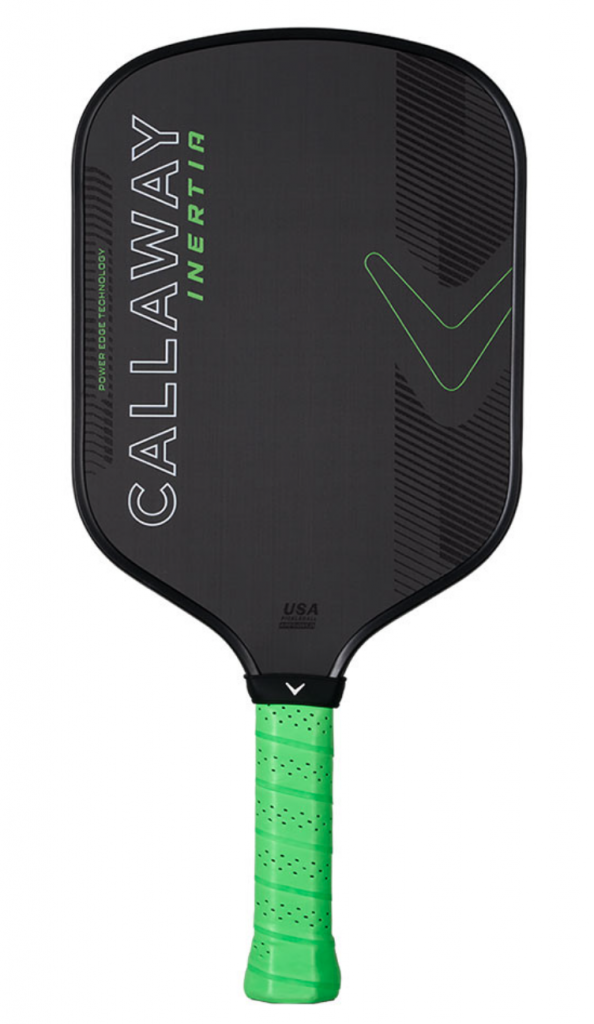
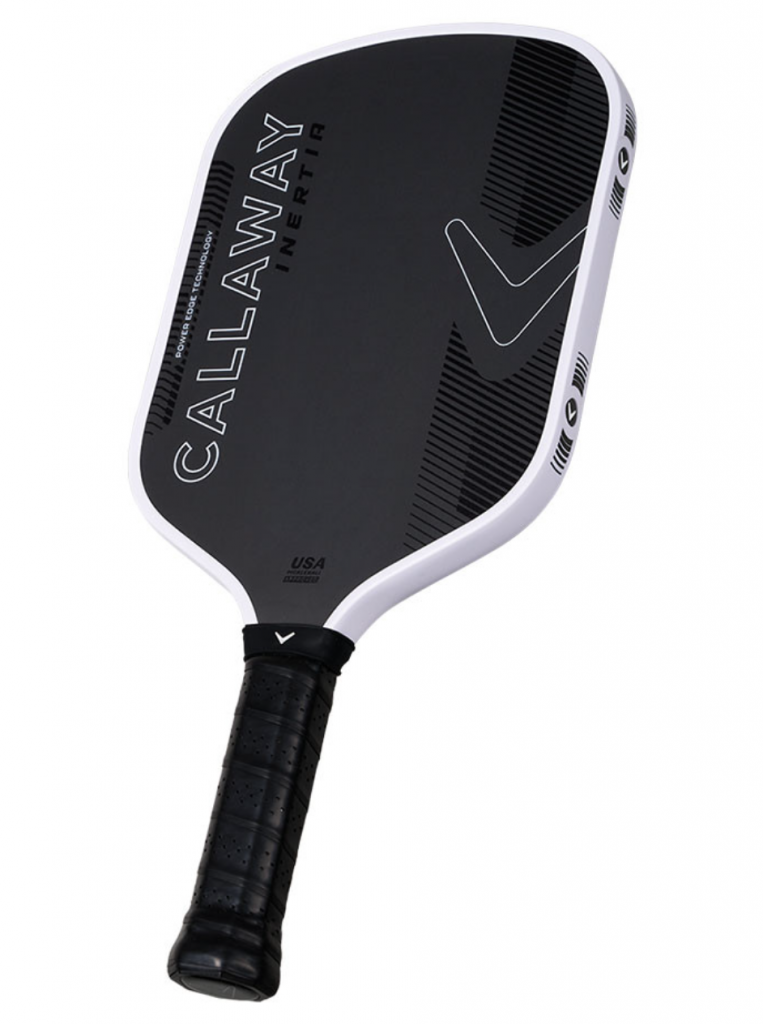
The biggest story in pickleball equipment right now isn’t a new startup—it’s legacy golf giants taking over the court. Callaway has officially entered the chat with their debut paddle, the Callaway Inertia. Armed with “Power Edge Technology” (borrowed from driver engineering to maximize Moment of Inertia) and a T700 carbon fiber face, this $250 paddle is aimed squarely at the premium country club demographic. While legacy tennis brands have historically struggled to conquer pickleball, Callaway’s massive R&D budget and built-in pro-shop distribution network mean this isn’t just a side hustle. It’s an invasion.
The Tech Specs: What Are You Paying For?
Callaway isn’t reinventing the wheel with the Inertia Pickleball Paddle, but they are refining it.
Weighing in at an average of 8.1 ounces with a 16.25″ Hybrid shape, this paddle is designed for the intermediate to advanced player who values stability and control. When you test the Inertia, the first thing you notice is the lack of vibration. Because of the perimeter weighting, the paddle acts like a shield. If your opponent blasts a drive at your chest and you catch it off-center, the paddle won’t spin out of your grip.
It plays very similarly to high-end Gen 1 control paddles. It won’t give you overwhelming pop, but it will keep your drops unattackable and your dinks disciplined.
| The Callaway Tech | What It Actually Does | The Court Translation |
|---|---|---|
| Power Edge Technology (MOI) | Perimeter Weighting | Sweet Spot – Maximizes stability so the paddle doesn’t twist in your hand when you mishit a block or reset. |
| Performance Face | T700 Carbon Fiber | Spin & Grit – A top-tier textured face reinforced with fiberglass to help you generate heavy topspin on deep drives. |
| 16mm Honeycomb Core | Thick Core Profile | Control – Absorbs energy well. Built for players who want steady, predictable resets at the Kitchen line rather than a wild “rocket ship” feel. |
| Advanced Grip | Karakal Wrap | Comfort – A tacky, locked-in 5.5-inch handle that leaves plenty of room for a two-handed backhand. |
The Industry Shift: Why Golf Will Succeed Where Tennis Failed
If you’ve been playing pickleball for a while, you might be skeptical. We’ve seen legacy tennis brands (like Head, Wilson, and Babolat) try to conquer the pickleball market with mixed, often lackluster results. They mostly released rebranded, cheap beginner paddles that couldn’t compete with the likes of JOOLA or Selkirk.
Check out our paddle tracker for the latest drops.
So why should we take Callaway, Mizuno, or PXG seriously?
- Massive R&D Budgets: Callaway spends millions engineering materials that can withstand 120 mph clubhead speeds. Applying that material science to carbon fiber pickleball faces is a natural, highly funded transition.
- The “Country Club” Pipeline: Callaway owns the pro shops. Across the country, premium golf resorts are ripping up tennis courts to build pickleball facilities. Callaway doesn’t have to fight for shelf space at big-box retailers; they already have a captive audience of premium buyers.
- Price Tolerance: A $250 paddle makes a lot of pickleball players wince. But to a golfer who routinely drops $600 on a new driver every other year, $250 for top-of-the-line sports equipment feels like a bargain.
Need a break from the court?
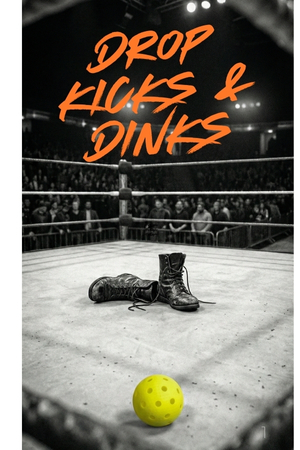
I wrote a short story called "Dropkicks and Dinks" about a pro-wrestler finding solace in pickleball. It's featured in my new collection.
Get it on Amazon →The Verdict: Should You Buy the Callaway Inertia?
If you are a 5.0 tournament grinder who obsessively watches paddle reviews, you already know you can find similar carbon-fiber specs in smaller indie brands for about $180.
But if you are a 3.5 to 4.5 player looking for an incredibly stable, highly durable control paddle backed by one of the most trusted manufacturing warranties in global sports—and you want your paddle to match the pedigree of your golf bag—the Callaway Inertia is an elite, reliable choice that won’t let you down on the court.

Drew Pierce is a USA Pickleball Ambassador, PPR certified coach, and tennis crossover who covers beginner tips, paddle releases, and the sport’s growing culture. Read more on his About page or tune into Pickle Rock Radio.