
Last Updated on October 20, 2026 by Drew Pierce
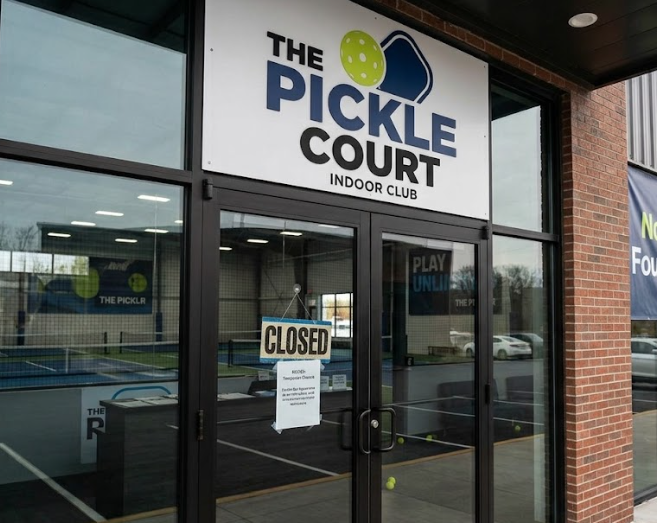
To protect your money at a pickleball club, pay monthly instead of a year upfront. Use a credit card, not debit, cash or Zelle. Get the cancellation terms in writing, and skip big presales for clubs that aren’t open. The Picklr’s October 2026 Chapter 11 filing is a reminder that prepaid dues are a promise, not a guarantee.
“Founding member” sounds like you’re getting in on the ground floor. Legally, it usually just means you paid before anyone else did.
I’m not anti-club. But this month’s news is a good excuse to talk about the boring stuff: contracts, cards, cancellations and coaches.
Not legal or financial advice. Federal rules apply everywhere. The New York sections apply only in New York, so check your own state’s law.
Quick Answer: What Should I Do Before I Pay a Pickleball Club?
- Pay monthly when you can. A discount for paying in full is the club asking you to carry its risk.
- Use a credit card. Federal law gives credit cards dispute rights that cash and payment apps don’t.
- Treat presales as unsecured loans. New York requires escrow or proof of financial responsibility for clubs that aren’t open yet.
- Screenshot the cancellation terms. Know the renewal date and how to cancel before you sign.
- Buy one lesson, not a package. Check the coach’s certification, then see how they teach.
What Actually Happened With The Picklr?
The Picklr’s parent company filed for Chapter 11, and its clubs say they’re still open. Here’s what the court record shows:
- Oct. 9, 2026: Picklr, Inc. filed a voluntary Chapter 11 case under Subchapter V, a fast track for small businesses, in federal bankruptcy court in Dallas (No. 26-34687).
- Oct. 10: Picklr Clubs Inc., which runs the company’s own clubs, filed too (No. 26-34690).
- The franchisor, Picklr Franchise Inc., did not file, according to the first-day declaration of the company’s chief restructuring officer.
That declaration counts about 90 clubs (nine company-operated and 81 franchised) and about 35,000 members. It blames nearly 40 lease guarantees the parent signed for franchisees. Its plans include “exiting underperforming company-operated clubs.”
“We signed, unfortunately, too many corporate guarantees that landed on the holding company. And that’s on us. I own it,” CEO Jorge Barragan told Sports Business Journal. The company says no clubs are closing as a direct result of the filing. Barragan told SBJ he expects some contraction over the next 18 to 24 months.
Separately, five franchised Picklr clubs with common ownership, including Danvers, Mass., filed their own Chapter 11 cases in Florida on Sept. 24.
What about the PPA? Pickleball Inc., the PPA Tour’s parent, led The Picklr’s 2024 funding round. Court papers list its subsidiary as a shareholder; I didn’t find it listed as a lender. Its own debt story is older: in June, PPA CEO Connor Pardoe told SBJ that more than half of a $225 million May raise went to “cap table cleanup,” including restructuring debt.
The Truth: If you’re one of those 35,000 members, you’re not a shareholder or a landlord. You’re a customer with a prepaid promise.
Why Are Founding Memberships and Presales Risky?
A presale funds construction with your money. That isn’t automatically shady, but it’s risk.
The Picklr’s filing says clubs sell “founders memberships (50 per court).” Scarcity is part of the pitch.
In New York, the state health club law gives you real protection (General Business Law Article 30).
- Escrow. Money taken before a club is fully open must go into escrow, unless the club proves its financial responsibility to the Secretary of State (§622).
- The one-year exit. A contract at a planned or under-construction club is voidable at your option if the club isn’t available within one year of signing (§624).
- A bond for most clubs. Most clubs must post a bond, letter of credit or CD. It ranges from $50,000 for terms up to 12 months to $150,000 for 24–36 months, with more for multiple locations (§622-a).
- The exemptions matter. A club can skip the bond if total payments stay at or under $150, or if it offers a monthly option at or under $150 a month that meets other conditions. Those conditions are that the paid-in-full discount is no more than 10%, the term is 12 months or less, and there’s no auto-renewal.
Does a pickleball club count? The law’s definition explicitly includes “sports, tennis, racquet ball, platform tennis” clubs. It exempts not-for-profit clubs and some tennis-only contracts. Pickleball isn’t named. I’d call coverage likely but unconfirmed. If a club says it’s exempt, it should be able to tell you why.
What New York Rules Help You Cancel?
| New York rule (GBL Art. 30 unless noted) | What it means for you |
|---|---|
| 3-business-day cooling-off (§624) | Cancel any new contract, refund within 10 business days |
| Club not open in 1 year (§624) | Contract voidable at your option |
| Move 25+ miles, disability over 3 months, club stops offering services (§624) | You can cancel later (pro-rated) |
| Annual renewal (§624) | Cancel within 15 business days after it takes effect |
| Monthly renewal (§624) | Cancel within 3 business days after it takes effect |
| How to cancel (§624) | Club must accept website, email, phone, mail or in person |
| Term and price caps (§623) | Max 36 months; $3,600 a year, though contracts solely for tennis, platform tennis or racquetball facilities are exempt |
| Auto-renewals (GBL §527-a) | Joined in person? The club must also offer online or phone cancellation |
Any contract that breaks Article 30 is “void and unenforceable” (§627), and a waiver you signed doesn’t change that.
Is There Still a Federal Click-to-Cancel Rule?
No. A federal appeals court vacated the FTC’s 2024 click-to-cancel rule in July 2025. The FTC formally restored the older rule on Feb. 12, 2026, then asked for comments on a new one. That comment period closed April 13. As of today, no new final rule exists.
The FTC still sues over hard cancellations. In August 2025 it accused LA Fitness of making cancellation difficult. Its advice is to keep proof of your cancel request. If charges continue, dispute them with your card company, because “just changing your credit or debit card number is often not enough.”
State law fills gaps. New York’s auto-renewal law (GBL §527-a) requires clear terms before you pay and a cancellation method as easy as signing up.
Why Should I Pay With a Credit Card?
Credit cards come with two federal protections under the Fair Credit Billing Act and Regulation Z:
- Billing errors. Per the CFPB, send a written dispute within 60 days after the charge appears on your statement.
- Claims and defenses. If a service isn’t delivered and the club won’t fix it, you can raise that with your card issuer. The purchase generally must exceed $50 and be in your home state or within 100 miles. You must have tried to resolve it with the merchant first. It only works on the unpaid balance.
One more detail matters right now. The Reg Z commentary says that when a merchant is in bankruptcy, you don’t have to file a claim in the bankruptcy and “may instead file a claim” with your card issuer.
If you do end up in a bankruptcy, the Bankruptcy Code gives prepaid consumer deposits for undelivered services a limited priority, up to $3,800 per person. Picklr’s claim deadlines are reported as Dec. 18 for Picklr, Inc. and Dec. 21 for Picklr Clubs. Check the court notice or claims agent before relying on those dates.
How Do I Vet a Pickleball Coach?
Full disclosure: I’m a PPR certified coach. My certification took a video pre-course, a five-hour workshop with a 20-minute sample lesson, and a 96-question online test. That’s real training. It’s also a floor, not a ceiling.
- Ask which certification and which level. USA Pickleball lists PPR, PCI and RSPA as its official certification partners. IPTPA, another major certifier, requires 12 hours of online education, a 4-hour on-court evaluation and an exam for its Level I.
- For kids, ask about a background check. IPTPA’s junior specialty requires one. USA Pickleball says it is SafeSport-trained but “not under the jurisdiction” of the U.S. Center for SafeSport.
- Buy one lesson before a package. My lesson cost guide has typical ranges. New York’s Department of State says to ask if and when prepaid sessions expire.
- Judge the feedback. A good coach is a mirror. If they mostly play points against you, you’re paying for a hitting partner.
Which Money Schemes Should Pickleball Players Watch For?
The FTC’s rule of thumb fits the sport perfectly: never pay someone who insists on crypto, a wire transfer, a payment app or a gift card.
- Too-good paddle deals. Counterfeits are real. Search the model on the approved list first (here’s how).
- Marketplace sellers. My used paddle guide covers platform buyer protection.
- “Investor” pitches at the club. A seat on the founders’ wall isn’t an investment. If someone sells you a stake, it’s a securities or franchise deal, so get a lawyer.
My take: Pay the club like a club, monthly, on a credit card, with the cancel button screenshotted. Save the loyalty for your doubles partner.
Pickleball Membership FAQ
Is a pickleball membership worth it?
If you’ll play more than drop-in fees would cover, often yes. The risk is in how you pay.
What happens to my Picklr membership in the bankruptcy?
The company says clubs are open and members are playing. The filings I read don’t specifically address member dues. Annual renewals at company-operated clubs “generally occur in November,” so read your renewal terms now.
Can I get a refund if my pickleball club closes?
Possibly, through a card dispute, a state bond (in New York), or a bankruptcy claim. Credit card payers usually have the most options.
How do I cancel a pickleball membership in New York?
In writing, by a method the contract lists. Health clubs must accept website, email, phone, mail or in-person cancellation. Keep proof.
Should I pay for a founding membership at a club that isn’t open?
Only an amount you could lose. In New York, ask whether your money is in escrow and whether the club has posted a bond.
Where do I complain?
In New York, the Division of Consumer Protection (1-800-697-1220) offers voluntary mediation. You can also report to ReportFraud.ftc.gov or file a complaint with the CFPB about your card issuer.

Drew Pierce is a USA Pickleball Ambassador, PPR certified coach, and tennis crossover who covers beginner tips, paddle releases, and the sport’s growing culture. Read more on his About page or tune into Pickle Rock Radio.