
Last Updated on August 21, 2026 by Drew Pierce
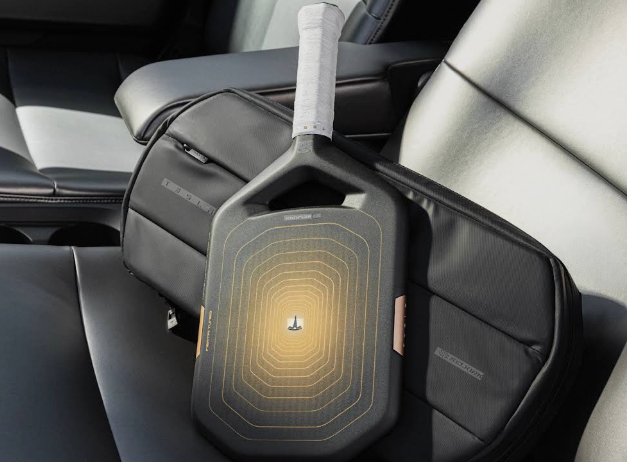
Tesla and Selkirk are back with a new collaboration, pickleball facilities are expanding worldwide, and the equipment landscape is changing in ways that matter to your game. Let’s talk gear and growth.
The Tesla Aurum Just Dropped—And It’s Already Sold Out
Release Date: August 20, 2026
Price: $295 (or $350 with carrying case)
Availability: Exclusive Tesla Shop (extremely limited)
Status: Sold out (again)
If you’ve been following the Tesla x Selkirk collaboration saga, you already knew this was coming. But the speed of the sellout is what matters here.
The Tesla Aurum Pickleball Paddle by Selkirk launched Thursday morning exclusively on Tesla’s website, and it vanished faster than you could text your paddle-obsessed friend about it.
The Aurum is essentially the Tesla Plaid paddle—same tech, same construction, same everything that matters on court—but with new aesthetic. The design features gold geometric patterns and bronze accents inspired by the exterior styling of Tesla’s long-awaited Cybercab.
Look, I get the appeal. Tesla just announced its Cybercab launch event in Austin, so this paddle is perfectly timed cultural marketing. The gold colorway ties directly into Tesla’s autonomous vehicle narrative. And for collectors and brand enthusiasts, owning a paddle that matches your Cybercab is probably worth the hype.
But here’s the reality: This is the exact same paddle that sold out in three hours last December. Nothing changed except the color. And Tesla knows it. That’s why they released it in “extremely limited quantities.”
What this tells us: The secondary market for limited-edition Tesla paddles is real. The Plaid paddles from December are now reselling for $450-600 on StockX and eBay. Tesla isn’t increasing production. They’re capitalizing on scarcity. That’s smart business if you’re Tesla. It’s frustrating if you actually want to use the paddle.
The Real Talk on Tesla Paddles
I reviewed the Tesla Plaid paddle earlier this year and gave it a mixed assessment. Here’s where I land on it now:
If you can get one: The paddle is genuinely high-quality. It has a full-foam core, edgeless aerodynamic design, and tech that actually works. It’s not a gimmick product. It’s legitimate equipment.
If you can’t get one: Don’t stress. The Plaid and Aurum are premium positioning paddles. If you spent $295-350 on a paddle, you should be able to afford a Honolulu J2CR Crystal Blue ($195) or a CRBN TruFoam Genesis ($252) and get arguably better performance per dollar. Both of those paddles will outplay the Tesla in actual tournament competition.
The real market: Tesla paddles are lifestyle products masquerading as sports equipment. They’re sold alongside Cybertruck merchandise and electric skateboards. If you want one because it’s a Tesla paddle, great—buy it if you can. If you want one because it’s the best paddle for your game, there are better options at lower prices.
Mooloolaba Tennis Club’s Eight-Court Expansion: How Australia Is Building Pickleball Infrastructure
Location: Mooloolaba, Queensland, Australia
New Courts: 8 dedicated pickleball courts
Timeline: Opening August 2026 (nearing completion)
Existing Facility: 10 tennis courts (staying in place)
Status: Nearly complete and set to open this month
While American pickleball facility announcements tend to focus on 15-20 court mega-complexes, the Mooloolaba Tennis Club expansion offers a different model: thoughtful integration.
The facility isn’t tearing down tennis courts to make room for pickleball. It’s not choosing one sport over another. Mooloolaba is building eight new pickleball courts as an addition to its existing facilities, allowing the club to operate its 10 tennis courts alongside the new pickleball precinct.
This matters because it reflects how pickleball is being integrated into established sports clubs globally. The tennis community isn’t disappearing. The badminton courts aren’t vanishing. Pickleball is expanding the available court inventory without cannibalizing other sports.
Why Mooloolaba, specifically? The Sunshine Coast has become a hotbed for pickleball development in Australia, with several highly-ranked players calling the region home. This eight-court facility responds to real demand from a growing local community.
The construction timeline: The project took more than three years to develop and overcame environmental and financial challenges before breaking ground. That’s the reality of facility development—it’s slow, complicated, and expensive.
The Broader Paddle Market: Full Foam Is Consolidating
This week’s Tesla Aurum launch is interesting not because it’s innovative—it’s identical to the Plaid—but because it signals market consolidation around full-foam core technology.
Here’s what’s happening in the paddle market right now:
Full foam is now the standard for premium paddles. The CRBN TruFoam Barrage, Honolulu J2CR Crystal Blue, Six Zero Coral/Black Opal, Tesla Plaid/Aurum, and JOOLA Pro V all use full-foam cores. Honeycomb is being pushed down-market as the “budget” construction method.
Durable grit is the new arms race. Every major brand now has a proprietary “long-lasting texture” system. The Tesla paddles feature InfiniGrit™ surface technology for enhanced durability. Honolulu has Crystal Blue Endurance Surface™. Six Zero has Diamond Tough. The message is clear: raw carbon fiber surfaces wear out, and brands are solving for longevity.
Pricing is stabilizing in tiers. Budget ($100-150), Mid-Range ($150-200), Premium ($200-300), and Luxury ($300+). The Tesla Aurum at $295 sits firmly in the luxury tier, competing against products like the CRBN TruFoam Barrage ($252) and Selkirk Boomstik ($333) for brand prestige rather than raw performance metrics.
New Paddle Notable: AIREO Cyclone Gen 4
While the Tesla Aurum is grabbing headlines, a less-talked-about release is getting positive reviews from intermediate players: AIREO’s Cyclone Gen 4 with Nanograph Grit Surface.
The Cyclone uses full-foam core construction with what AIREO calls “Nanograph Grit”—a crystalline surface treatment designed for spin and durability. The paddle is available on Amazon and major retailers, positioned as a value alternative to premium brands.
Price point: ~$180-200. Not Tesla money. Not Honolulu money. But solidly premium-mid-range with legitimate full-foam technology.
This is the kind of paddle that’s actually disrupting the market—not because it’s shiny or limited edition, but because it offers competitive features at accessible pricing.
Final Thoughts: Gear Matters, But Facility Access Matters More
This week’s news highlights something important: The equipment market is getting more consolidated and specialized, but facility access is still the limiting factor for pickleball’s growth.
Tesla can sell out paddles in hours. Honolulu can charge $195 for a premium foam paddle and build a cult following. But none of that matters if recreational players can’t book court time.
That’s why Mooloolaba’s eight-court expansion is more significant long-term than Tesla’s Cybercab-inspired paddle. Facilities are the constraint. Equipment is abundant.
If you’re a recreational player in 2026, you have more high-quality paddle options at various price points than ever before. What you might not have is easy access to a decent court during your preferred playing time.
Invest in facilities. Invest in court time. Then worry about whether your paddle matches your car.

Drew Pierce is a USA Pickleball Ambassador, PPR certified coach, and tennis crossover who covers beginner tips, paddle releases, and the sport’s growing culture. Read more on his About page or tune into Pickle Rock Radio.