
Last Updated on April 14, 2026 by Drew Pierce
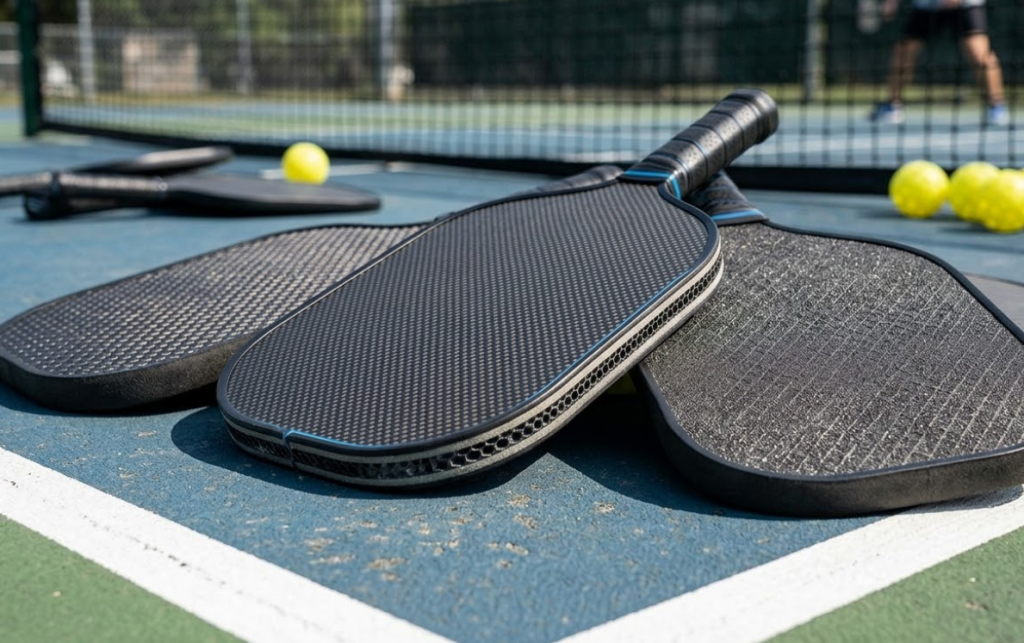
Hey pickleball fans, Ace here. While everyone’s been obsessing over MLP draft drama and PPA Tour results, the paddle market has been quietly going through one of its most interesting periods in years. We’ve got Anna Leigh Waters’ signature Franklin paddle shipping this week after record-fast approval, JOOLA launching a hybrid shape that nobody asked for but everyone’s curious about, and a technology arms race that’s making Gen 3 vs Gen 4 debates look quaint.
Let’s talk about what’s actually landing in mailboxes and hitting retail shelves over the next few weeks, because this is where the rubber meets the road—or more accurately, where carbon fiber meets polymer cores.
Franklin Aurelius: The Paddle That’s Already in Your Hands (Maybe)
If you pre-ordered Anna Leigh Waters’ Franklin Aurelius paddle back in January, congratulations—it should have shipped on March 1st, which means you’ve probably already been testing it for the past two weeks.
For those who missed the pre-order window or are just now hearing about this, here’s the quick version: Waters left Paddletek after seven years, signed a multi-million dollar deal with Franklin in early January, and got her signature paddle approved by the UPA in less than a month. That’s lightning-fast in an industry where approval processes typically take months.
The Aurelius comes in three core thicknesses—12.7mm, 14mm, and 16mm—and Waters herself is playing with the 12.7mm version. That’s the thinnest, poppiest, least forgiving option. It’s also the one that’ll make 4.0 recreational players wonder why their mishits are sailing long while Waters is drilling winners with it on the PPA Tour.
Need a break from the court?
I wrote a short story called "Dropkicks and Dinks" about a pro-wrestler finding solace in pickleball. It's featured in my new collection.
Get it on Amazon →Here’s my take as someone who’s been following the paddle market closely: the 12.7mm is a pro paddle designed for pro skills. If you don’t have elite hand-eye coordination and consistent mechanics, you’re going to hate it. The sweet spot is smaller, the margin for error is tighter, and every slightly off-center hit will remind you that you’re not Anna Leigh Waters.
The 14mm version is the Goldilocks option for most serious players. It gives you more pop than traditional 16mm paddles while maintaining enough forgiveness to not punish every mistake. If you’re a solid 4.5-5.0 player who wants to feel what a high-end Gen 3 paddle can do, this is your entry point.
The 16mm version prioritizes touch and control over raw power. It’s got the largest sweet spot, the most forgiveness, and the softest feel on dinks and resets. This is the paddle for 4.0-4.5 players or anyone who plays a finesse game rather than a power game.
What makes the Aurelius interesting from a business perspective is how quickly Franklin moved. They signed Waters on January 8th, opened pre-orders on January 16th, got UPA-A approval on February 6th, and shipped on March 1st. That’s a five-week turnaround from announcement to paddles in customers’ hands. In an industry where product launches typically take 6-12 months, Franklin just demonstrated that if you have the resources and the manufacturing relationships, you can move way faster than your competitors.
This matters because Franklin lost Ben Johns to JOOLA a few years ago, and that departure left a real void in their pro roster. JW and Jorja Johnson just left Franklin for other sponsors. Waters fills that void and then some. She’s the most marketable player in pickleball, with 181 gold medals and 39 Triple Crowns. If Franklin can turn that star power into market share gains, this signing will pay for itself many times over.
Have you tried our new pickleball shot analyzer app? It’s free and the first of its kind. Check it out!
Six Zero Black Opal: The Grit Kings Strike Again
If you want absurd amounts of spin and don’t mind paying for it, Six Zero’s Black Opal just became the new standard for surface texture. It’s their first paddle release in almost two years, and they’ve put a diamond-infused surface on it that generates even more spin than their already-gritty DBD model.
The Black Opal uses Gen 4 foam core technology, but it’s not the plush, soft-feeling foam you get from some brands. Six Zero went for power. This paddle hits hard, spins like crazy, and rewards aggressive players who like to attack. If you’re an intermediate or advanced player who wants to add heavy topspin to your drives and put-aways, this is worth demoing.
The downside? It’s not forgiving. Beginners and new intermediates will find it punishing on mishits. The sweet spot isn’t huge, and if you’re still working on consistent contact, you’ll spend a lot of time hitting balls into the net or sailing them long.
Also, that diamond-infused surface won’t last forever. Heavy grit paddles wear down faster than smooth-surface paddles. You might get 6-12 months of peak performance before the texture degrades and you start losing spin. At premium pricing, that’s a legitimate consideration.
Honolulu J6CR: The Power Paddle That Wants to Have It All
Honolulu Pickleball just launched pre-orders for their J6CR paddle, which is shipping March 31st. This is their new flagship power paddle, and it’s loaded with marketing buzzwords: Core Reactor™, Dynamic PowerFlex Technology™, and Control Joint Technology™.
Strip away the branding and here’s what you actually get: an elongated paddle with more head weight for increased swing speed and power, built on their Gen 4 foam core platform with thermocompression forming for consistency. Weight range is 8.0-8.2 oz, swing weight is 111-116, and it’s designed to give you maximum pop while maintaining reasonable control.
Honolulu’s J2NF model has been highly rated by reviewers for months—it’s consistently cited as one of the best all-around paddles on the market. The J6CR is their attempt to capture the power segment without sacrificing the control and feel that made the J2NF successful.
My take: if you loved the J2NF but wanted more power, this is worth trying. If you’re looking for your first premium paddle, stick with the J2NF—it’s more forgiving and versatile. The J6CR is for players who know they want power and are willing to sacrifice some forgiveness to get it.
Also, side note: that March 31st ship date means if you order now, you’re looking at a 2-3 week wait. That’s actually pretty reasonable given how many paddle launches slip their dates.
The Gen 4 Foam Debate: Are We Overpaying for Hype?
While we’re talking about new paddles, let’s address the elephant in the room: Gen 4 foam core technology.
Every major brand is pushing foam cores as the next evolution in paddle design. The marketing pitch is compelling: better vibration dampening, improved durability, larger sweet spots, and more consistent performance across the paddle face.
But here’s what top paddle reviewers are saying: Gen 3 paddles (polymer honeycomb with foam edges) are still delivering the most power at the legal limit. Gen 4 offers consistency and durability, but you’re giving up some pop to get it.
So why is everyone pushing Gen 4? Because it’s new, it’s marketable, and brands can charge premium prices for it. A Gen 3 paddle might retail for $150-180. A Gen 4 paddle with similar specs will be $200-250. That price difference is pure margin.
Am I saying Gen 4 is a scam? No. The technology is real, the benefits are real, and for certain players—especially those who prioritize touch and consistency over raw power—Gen 4 is genuinely better. But for recreational players who just want more pop on their drives, Gen 3 is still the better value.
The paddle market is experiencing what economists call “feature creep.” Every new release has to add something—hybrid shapes, diamond-infused surfaces, proprietary foam densities, smart sensors that track your swing metrics. Some of these innovations are meaningful. Many are marketing gimmicks designed to justify higher prices.
What’s Actually Worth Your Money Right Now?
If you’re in the market for a new paddle and trying to navigate this madness, here’s my honest advice:
Best overall value: Honolulu J2NF. It’s $179, performs at the level of paddles that cost $250+, and it’s been consistently rated as one of the best all-around paddles for the past year. Unless you have very specific needs, this is the safe choice.
Best for power: Six Zero Black Opal or Honolulu J6CR. Both deliver serious pop. The Black Opal has more spin, the J6CR has better control. Try both if you can and go with whichever feels better.
Best for Anna Leigh Waters fans: Franklin Aurelius 14mm. Don’t buy the 12.7mm unless you’re a 5.0+ player with elite mechanics. The 14mm gives you 80% of the performance with way more forgiveness.
Best for people who hate making decisions: Wait for the JOOLA Kosmos reviews to come out in mid-March and see if it’s actually as good as the hype suggests. If not, buy the J2NF and stop overthinking it.
Best for people with money to burn: RPM Friction Pro. It’s $240, generates absurd spin, and is the signature paddle of James Ignatowich (who’s selling 10,000 units per month despite being banned from PPA events). If you want the spiniest paddle on the market and don’t care about cost, this is it.
The Broader Trend: Consolidation and Casualties
Here’s the bigger picture that’s easy to miss when you’re focused on individual paddle launches: the paddle market is consolidating.
Small brands that focused on rebadged catalog paddles are falling off. Companies that can’t keep up with the technology arms race are getting acquired or going out of business. The brands that are winning are the ones with deep pockets (JOOLA, Selkirk, Franklin), strong R&D capabilities, and pro player endorsements that drive consumer awareness.
This is what happens when a niche sport goes mainstream. The market matures, margins compress, and only the strongest players survive. We saw this in tennis, golf, and every other racquet sport. Pickleball is no different.
For consumers, this means fewer choices but higher quality. The paddles that make it to market in 2026 are generally very good. The bad paddles don’t make it past the design phase anymore because the cost of failure is too high.
For small brands, this means innovate or die. You can’t just slap a logo on a generic paddle and expect to compete. You need proprietary technology, unique selling propositions, and either celebrity endorsements or grassroots community building to generate awareness.
The RPM Paddles success story is instructive here. James Ignatowich got banned from PPA events, couldn’t play for money on the biggest tour, and responded by building a paddle company that’s now moving 10,000 units per month. That’s not an accident. That’s a pro athlete with credibility, a following, and a chip on his shoulder building something that resonates with players who feel like the establishment doesn’t represent them.
Final Thoughts: Buy Based on Your Game, Not the Hype
The paddle market is designed to make you feel like you’re always one purchase away from playing better pickleball. New materials! Revolutionary core technology! Signature models from the top pros! Limited edition colorways!
It’s all noise.
Here’s the truth: your paddle matters, but it matters way less than your footwork, your shot selection, and your ability to read the game. A 4.0 player with a $100 paddle will beat a 3.5 player with a $300 paddle every single time.
So yes, pay attention to the new releases. Demo the paddles that sound interesting. Buy the one that feels good in your hand and performs the way you want it to.
But don’t fall for the hype. Don’t convince yourself that Anna Leigh Waters’ signature paddle will magically give you her hands. Don’t buy the Gen 4 foam paddle because it’s “the future” if you actually prefer the pop of a Gen 3 honeycomb core.
The best paddle is the one that matches your playing style, feels comfortable for extended sessions, and doesn’t make you worry about whether you made the right choice.
For most people reading this, that’s probably not the newest, shiniest, most expensive option. And that’s okay.
Play smart. Buy smart. And remember that the pros are playing with $200 paddles not because they need them, but because they’re getting paid to use them.
You’re not getting paid. Choose accordingly.
