
Last Updated on April 29, 2026 by Drew Pierce
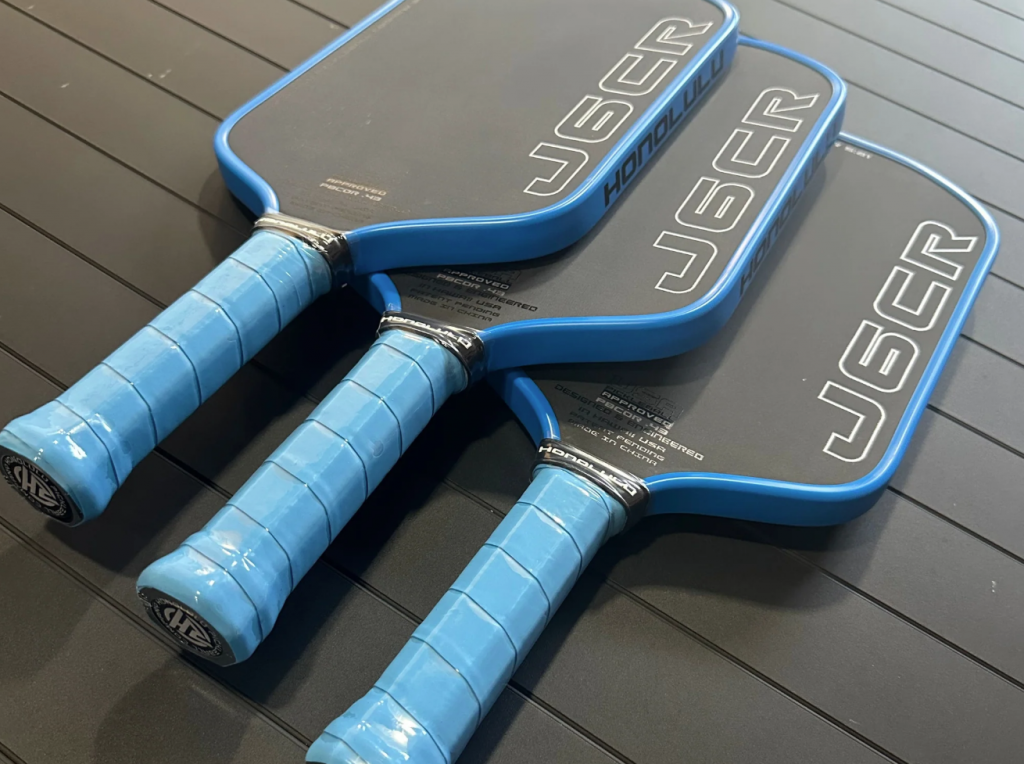
The Honolulu Pickleball Gen 4 Foam lineup ($195) introduces “Gen 4.5” multi-density foam technology designed to maximize energy return while eliminating the vibration common in honeycomb paddles. The J2CR is the ultimate balanced hybrid for most 4.0 players, the J6CR is a baseline power specialist with an 111-116 swing weight, and the J3CR is built for maximum hand speed at the kitchen line.
The Best Foam Paddles You Can Buy Right Now – Here’s Everything You Need to Know
Honolulu Pickleball Company just dropped four new Gen 4 foam paddles that are redefining what’s possible with foam core technology. If you’ve been following the paddle market in 2026, you know foam is where the innovation is happening. And Honolulu—the company that won 2024 Paddle of the Year —just raised the bar again.
These aren’t incremental improvements. The J6CR, J2CR, J3CR, and J6CR Crystal Blue Endurance Surface represent a completely new generation of paddle technology featuring patent-pending Core Reactor™, Dynamic PowerFlex™, and industry-first Control Joint Technology™.
All four paddles ship April 15, 2026 (except the Crystal Blue, which ships May 2026). All are priced at $195. And all are USA Pickleball approved (Crystal Blue pending UPA-A approval).
If you’re researching your next paddle and you’re willing to invest in premium equipment, this guide will tell you everything you need to know.
New: Pickle Rock Radio
I just launched a brand new 24/7 internet broadcast... a free Pickleball Radio Station that soundtracks your open play sessions with 90s & 00s alternative rock, while dropping pro tips, local court reports, and gear news between tracks.
Please tune in and share your honest feedback!
Listen to the Live Broadcast →What Makes Honolulu Gen 4 Foam Different?
Before we dive into the individual paddles, let’s talk about what makes the entire Gen 4 foam lineup special. These aren’t just “foam core paddles.” They’re a ground-up redesign built around three proprietary technologies:
Core Reactor™ Technology
Honolulu’s Core Reactor™ system uses a multi-density foam core that’s designed to maximize energy transfer while maintaining control. Unlike traditional single-density foam cores, the Core Reactor™ combines different foam densities in strategic locations to create a core that’s simultaneously responsive and forgiving.
Think of it like a suspension system in a car: the foam absorbs impact where you need dampening (for control and touch) and releases energy where you need power (for drives and put-aways).
Dynamic PowerFlex™ Technology
Dynamic PowerFlex™ is Honolulu’s term for the way their Gen 4 foam cores flex and return to shape under impact. The multi-density construction allows the paddle face to compress into the foam core during contact, then spring back with stored energy.
The result: you get noticeable power increases compared to Gen 3 honeycomb paddles without sacrificing the soft, controlled feel that foam is known for. It’s the best of both worlds—pop when you need it, touch when you want it.
Check out our paddle release calendar.
Control Joint Technology™
This is the industry-first innovation. Control Joint Technology™ refers to the way Honolulu has engineered the perimeter of their Gen 4 foam paddles to allow for controlled flex at the edges while maintaining rigidity in the hitting zone.
The practical effect: larger sweet spot, better stability on off-center hits, and reduced vibration. When you mis-hit a ball near the edge of the paddle, the Control Joint absorbs some of that twisting force instead of transmitting it to your arm. For players who’ve struggled with tennis elbow or wrist pain from stiff paddles, this is a game-changer.
Honolulu Gen 4 Foam: Tech Specs Comparison
| Model | Shape | Swing Weight | Twist Weight | Dimensions |
|---|---|---|---|---|
| J6CR | Optimized Elongated | 111 – 116 | 6.2 – 6.7 | 16.48″ x 7.52″ |
| J2CR | Aero Hybrid Plus | 110 – 114 | 7.0 | 16.2″ x 7.8″ |
| J3CR | Aero Standard Square | 108 – 113 | 6.8 – 7.1 | 16″ x 8″ |
| Crystal Blue | Optimized Elongated | 111 – 116 | 6.2 – 6.7 | 16.48″ x 7.52″ |
Gen 4.5 Multi-Density Foam Construction
All four paddles use what Honolulu calls “Gen 4.5” foam cores. This isn’t marketing speak—it’s a specific construction method:
- EPP (Expanded Polypropylene) core interlaced with EVA (Ethylene-Vinyl Acetate) perimeter foam.
- The EPP provides responsive, consistent performance across the face.
- The EVA perimeter adds stability and dampening around the edges.
- Together, they create a “floating-pivoting core” that moves independently within the paddle frame, absorbing shock and maximizing energy return.
J6CR – The Power Paddle
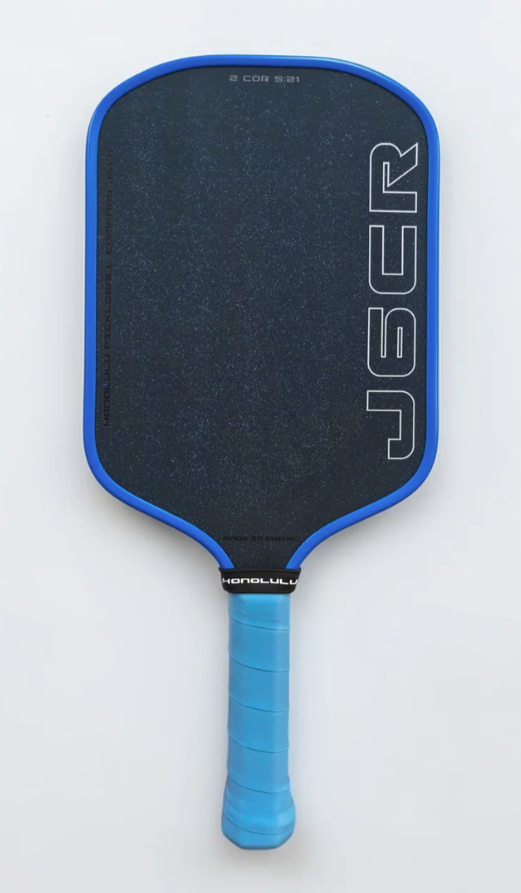
The J6CR is Honolulu’s most powerful paddle. If you’re looking for maximum pop, extended reach, and the ability to hit winners from deeper in the court, this is your paddle.
Shape & Design: The “Optimized Elongated” profile builds on Honolulu’s popular J2 long-handle design but takes it further. At 16.48″ × 7.52″, it pushes the legal length limit while maintaining enough width to avoid feeling like a tennis racket.
Performance Characteristics: With a swing weight of 111-116, this is a head-heavy paddle designed for players who generate their own hand speed and want maximum leverage on drives and overhead smashes.
J2CR – The Goldilocks Paddle
Honolulu calls the J2CR the “best hybrid paddle on earth,” and after looking at the specs, that’s not hyperbole.
Shape & Design: The “Aero Hybrid Plus” shape at 16.2″ × 7.8″ combines the power of an elongated paddle with the control and sweet spot size of a standard shape.
Performance Characteristics: That 7.0 twist weight is significant. It means the paddle resists twisting on off-center hits better than either the J6CR or J3CR. Combined with the Control Joint Technology™, this makes the J2CR exceptionally forgiving. It also offers two handle options: a 5.5″ traditional or a 6″ extended handle.
J3CR – The Hand Speed Paddle
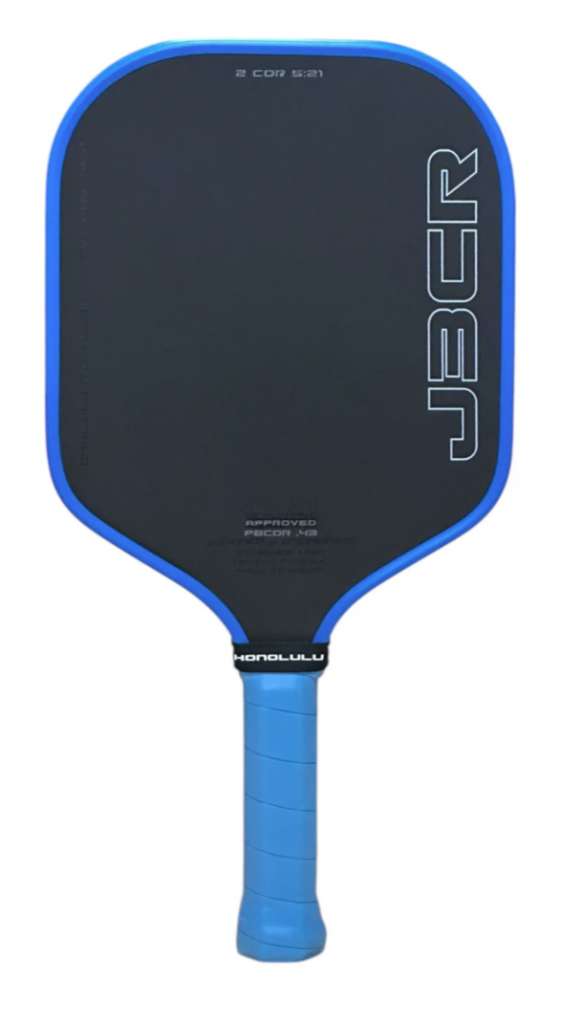
The J3CR is for players who live at the kitchen line and win points with fast hands, not power.
Shape & Design: The “Aero Standard Square” at 16″ × 8″ is the widest paddle in the lineup. That 8″ width gives you maximum forgiveness on off-center hits and the largest sweet spot for blocks and resets.
Performance Characteristics: The 108-113 swing weight is the lowest in the lineup, making it a fast paddle for quick reactions during exchanges.
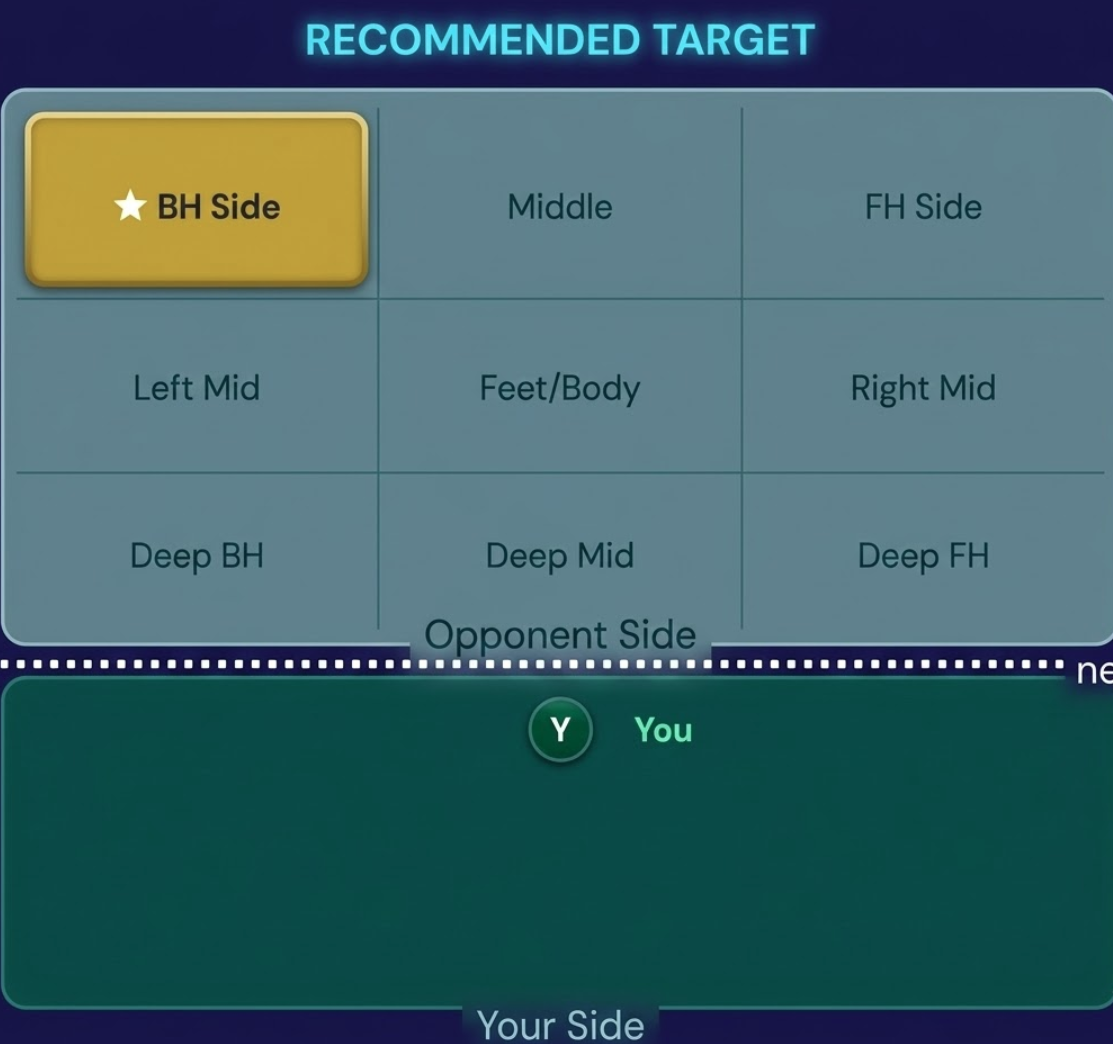
New: Pickleball Shot Strategist
I just built my first web app...a free Pickleball Shot Strategist that analyzes your situation (incoming shot, court position, opponents, spin, etc.) and instantly suggests the smartest doubles play, risk level, and target placement.
Please share your honest feedback!
Try the Strategy Tool →J6CR Crystal Blue Endurance Surface™ – The Premium Option
This is the same J6CR elongated power paddle but with one critical upgrade: Crystal Blue Endurance Surface™.
What is it? Honolulu has embedded crystalline particles into the paddle surface to create a more durable, longer-lasting texture for spin. This addresses the biggest complaint about raw carbon fiber paddles: the grit wearing off after 3-6 months.
Honolulu Gen 4 Foam vs. Gen 3 Honeycomb: Should You Upgrade?
If you’re currently playing with a Honolulu Gen 3 honeycomb paddle (like the J2NF or J3NF), should you upgrade to Gen 4 foam? Short answer: Yes, if you can afford it.
- Better feel: Foam is inherently softer and more responsive.
- Reduced Vibration: Naturally dampens vibration better than honeycomb—great for injury prevention.
- More power with control: You get more pop without the trade-off of losing your touch.
Are Honolulu Gen 4 Foam Paddles Worth $195?
Yes—if you’re a serious player (4.0+) who plays regularly. At $195, these are $25-55 less than comparable premium foam paddles from brands like Six Zero or Selkirk, and $150 less than the Tesla x Selkirk Plaid ($350).
Ready to order? Visit the Honolulu Foam Gen 4 collection and secure your paddle before the April/May batches sell out.
Which Honolulu Gen 4 Foam Paddle Is Right For You?
| Player Type | Recommended Model | Primary Reason |
|---|---|---|
| Baseline Power Player | J6CR | Highest leverage and maximum reach for drives and overheads. |
| All-Court / Hybrid | J2CR | Perfect stability (7.0 twist weight) and balance of power/control. |
| Kitchen / Fast Hands | J3CR | Fastest swing speed and widest face for blocks and resets. |
| The 5-Day-A-Week Grinder | Crystal Blue | Enhanced surface durability to prevent spin decay over time. |