
Last Updated on September 7, 2026 by Drew Pierce
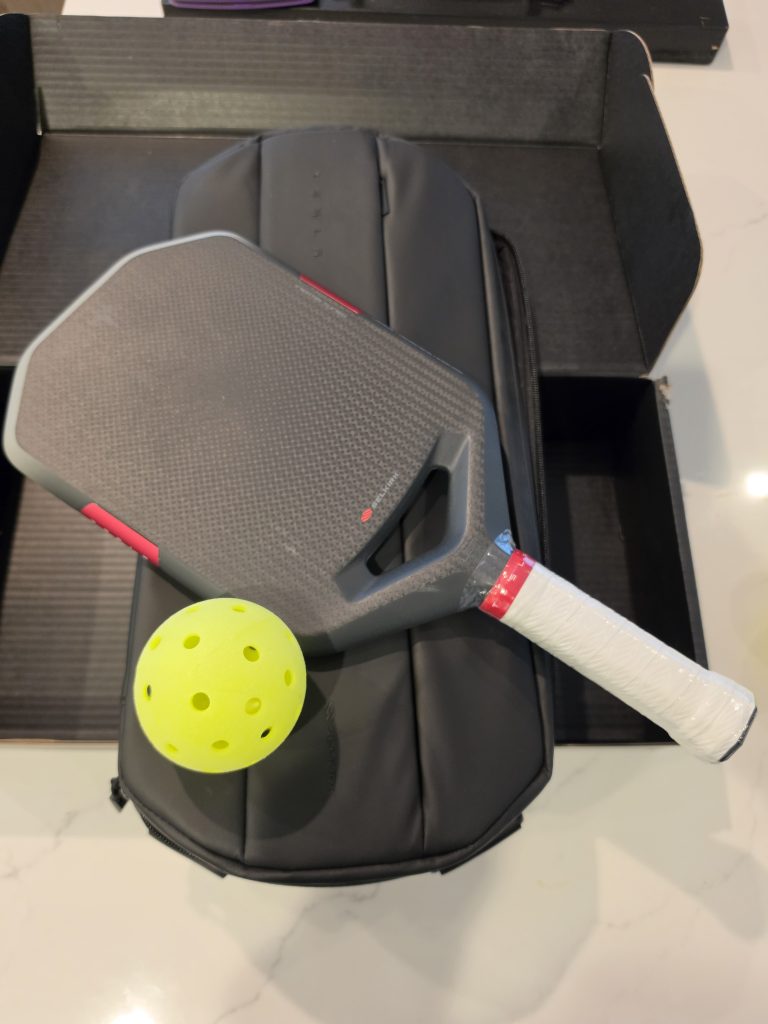
The Tesla x Selkirk Plaid Pickleball Paddle is a $350 status symbol that delivers elite spin (1600+ RPM) and excellent defensive resets but fails to justify its record-breaking price tag for the average 4.0 player. While the Tesla-engineered aerodynamics are legitimate, the paddle suffers from mediocre power (38.99 MPH exit velocity) and a head-heavy swing weight that noticeably slows down hand speed at the kitchen. For those seeking performance over branding, alternatives like the Honolulu J2NF ($179) offer superior all-around playability for nearly half the cost.
When my Tesla Plaid Pickleball Paddle by Selkirk arrived last week, I felt something I didn’t expect: shame. Not buyer’s remorse—that came later. Just pure, unfiltered shame at having spent $350 on a pickleball paddle with a car company logo on it.
I’m a 4.0 player. I’ve been playing for quite a few years. I use decent equipment—nothing crazy, but solid mid-range paddles that perform well. And when Tesla dropped this collaboration with Selkirk in December 2025, I got caught up in the hype. The paddle sold out in three hours. The reviews called it “revolutionary aerodynamics.” Tesla fanboys and pickleball nerds were both losing their minds.
So I bought one during the second drop on December 22nd, paying $350 plus shipping for what is objectively the most expensive pickleball paddle on the market.
Here’s everything you need to know about the Tesla pickleball paddle before you make the same mistake I did.
Rapid-fire Check
Worth $350 for most 4.0s? No.
Best thing: spin and resets.
Worst thing: head-heavy / kitchen hand speed.
Aurum vs Plaid: same paddle, gold paint, $295–$350.
What Is the Tesla Pickleball Paddle? (And Why Does It Cost $350?)
The Tesla x Selkirk Plaid Paddle isn’t just a branding exercise where Tesla slapped a logo on an existing Selkirk model. It’s a genuine collaboration that took over a year to develop, starting in March 2024 when Selkirk’s Director of R&D Tom Barnes visited Tesla’s Fremont Factory.
Tesla contributed aerodynamic modeling, the same computational fluid dynamics they use for car design, to reduce drag coefficients and turbulent wake patterns during paddle swings. Selkirk provided paddle manufacturing expertise, materials science, and USAP certification know-how.
The result is a paddle with:
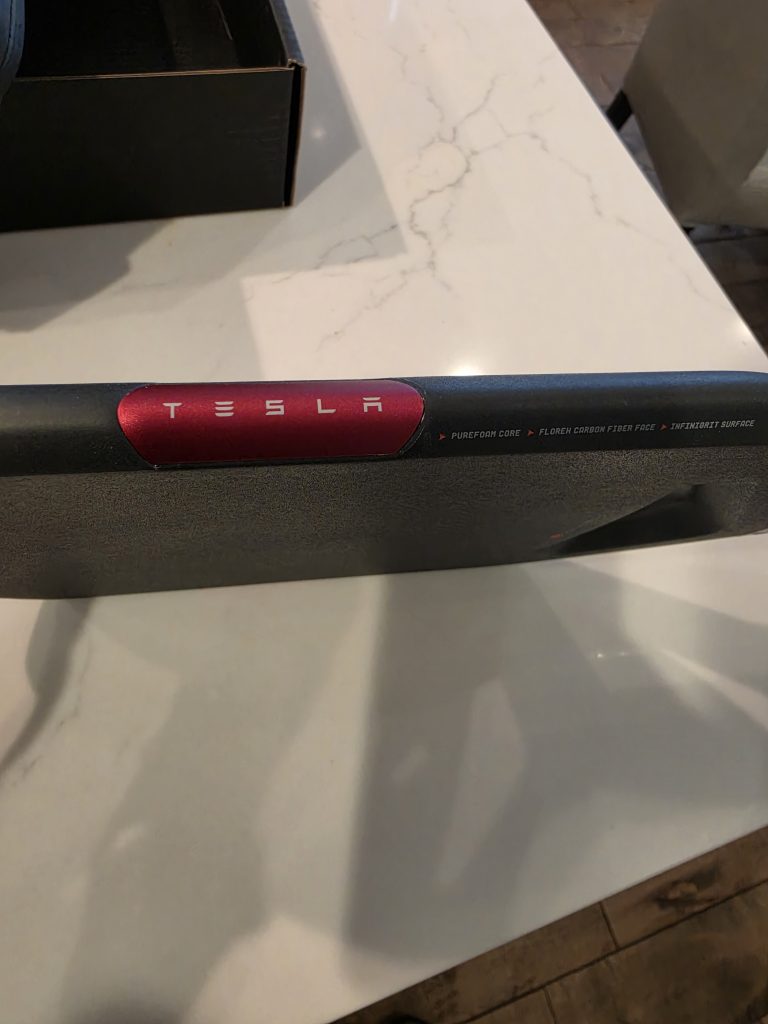
- Elongated, edgeless design tested in Tesla’s wind tunnels
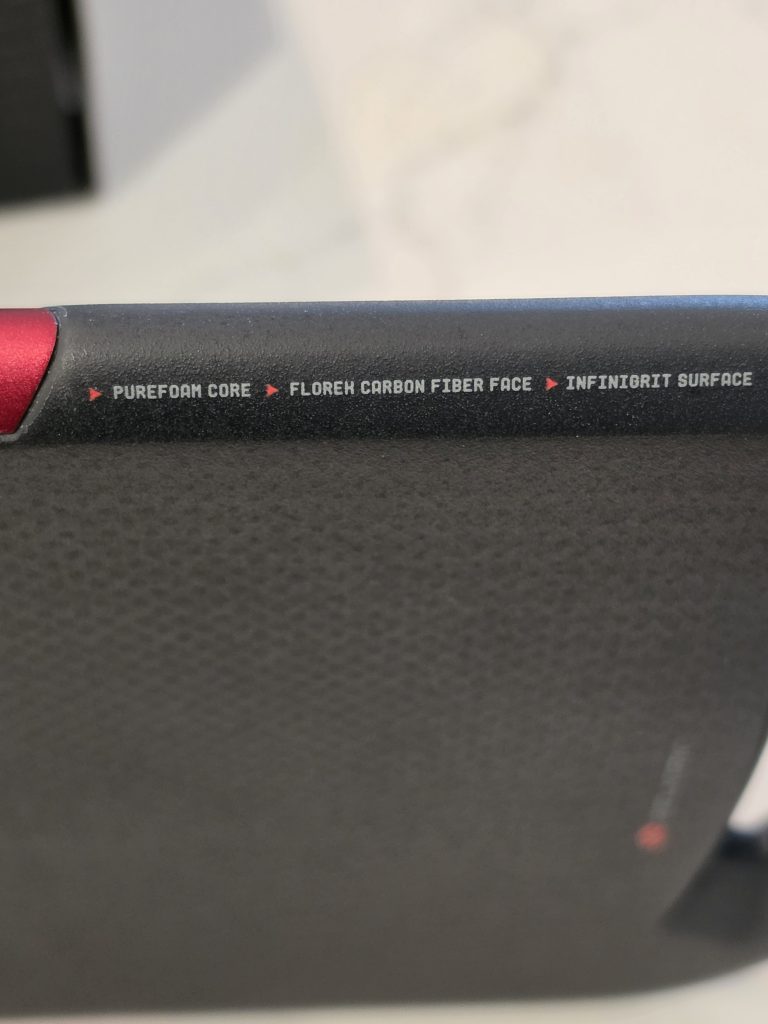
- Two-ply carbon fiber face with InfiniGrit™ surface technology
- 16mm PureFoam core (full Gen 4 foam, not honeycomb)
- TPU Power Ring designed specifically for this paddle
- MOI Tuning System for weight distribution and sweet spot optimization
- Throat hole (borrowed from Selkirk’s VANGUARD line)
- Weight: 7.8-8.1 oz
- Dimensions: 16.4″ x 7.5″
- USAP approved for tournament play
- Price: $350
To put that price in perspective: professional tennis players like Carlos Alcaraz use rackets that retail for $299. The highest-end pickleball paddles from JOOLA, Selkirk, and Franklin typically max out around $220-250. The Tesla paddle costs more than equipment used at Wimbledon.
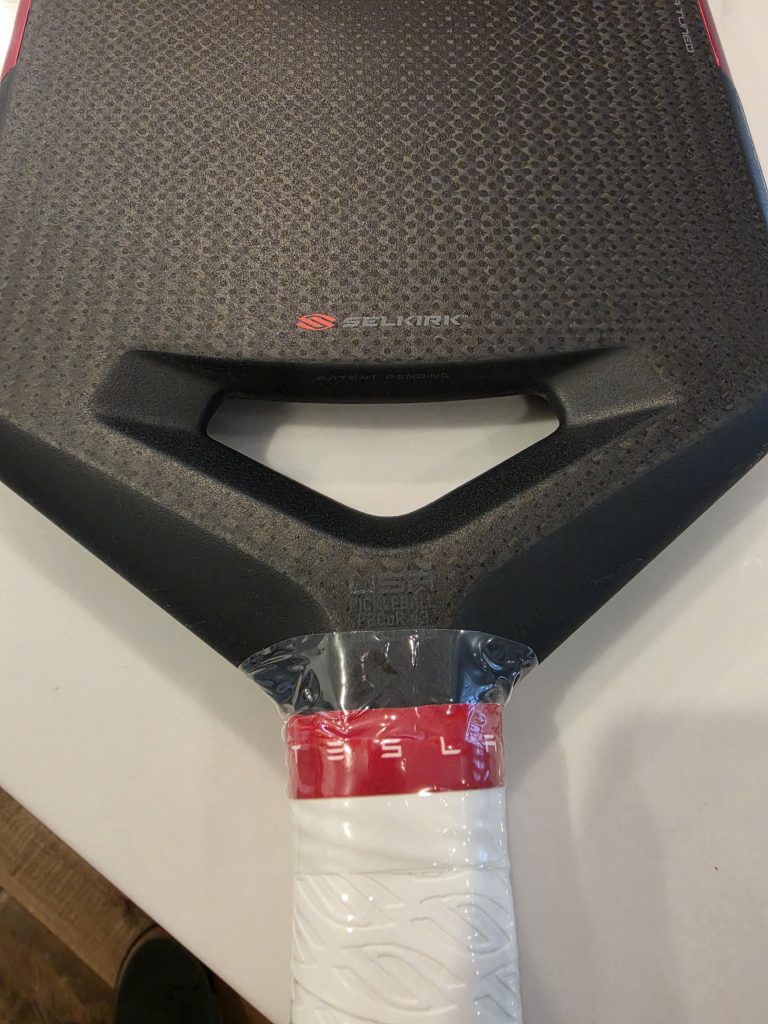
The Tesla Pickleball Paddle Specs: What Lab Testing Reveals
Before we get into my personal experience, let’s look at what independent testing shows. JustPaddles put the Tesla paddle through their Paddle Lab, and the numbers are interesting:
Spin Rate: 1600.55 RPM – This is genuinely elite. It ranks 3rd highest among all paddles tested, just behind the Babolat WZRD (1607 RPM) and Diadem Hush Quiet (1828 RPM). The InfiniGrit surface delivers. If you win points by putting heavy topspin on drives and making balls dip at opponents’ feet, this paddle performs.
Exit Velocity: 38.99 MPH – This is mid-tier power, comparable to paddles like the CRBN TruFoam Genesis. Not a power paddle. Not a control paddle. Somewhere in between, which sounds good on paper but can feel mushy in practice.
New: Pickle Rock Radio
I just launched a brand new 24/7 internet broadcast... a free Pickleball Radio Station that soundtracks your open play sessions with 90s & 00s alternative rock, while dropping pro tips, local court reports, and gear news between tracks.
Please tune in and share your honest feedback!
Listen to the Live Broadcast →Feel: Dampened, muted, plush – Multiple reviewers describe the paddle as having a “low-frequency thud” rather than the crisp “pop” of power paddles. This is due to the full foam core and TPU Power Ring absorbing vibration.
Sweet Spot: Above average but not elite – The MOI system helps, but it’s not magic. Off-center hits still feel noticeably worse than center strikes.
Tesla x Selkirk Plaid Specs & Lab Results
| Metric | Detail / Result |
|---|---|
| Price | $350.00 |
| Core | 16mm PureFoam (Gen 4) |
| Spin Rate | 1600.55 RPM (Elite) |
| Exit Velocity | 38.99 MPH (Moderate) |
| Swing Weight | High (Head-Heavy) |
| Best For | Spin-heavy finesse players & collectors |
My Experience as a 4.0 Player: The Tesla Paddle Feels Heavier Than It Is
Here’s where I need to be honest about my own game. I’m a 4.0 player who plays mostly doubles at my local courts. I don’t have pro-level hand speed. I don’t have perfect mechanics. I’m working on consistency, shot selection, and not hitting balls into the net during high-pressure points.
The Tesla paddle feels heavy. Not on a scale: it weighs 7.9 oz., which is normal. But the swing weight is noticeably higher than the paddles I’m used to. That elongated shape shifts the balance point toward the head, and during fast-hand battles at the kitchen, I felt slow.
One reviewer called it “clunky in real play,” and I completely agree. During quick exchanges, the paddle felt like it was dragging. During resets, it felt fine. During dinks, it felt plush and controlled. But the moment I needed to react fast—block a drive, counter a speed-up, defend against a hard shot—the Tesla paddle was just a fraction of a second behind where I needed it to be.
That fraction of a second matters at 4.0 and above.
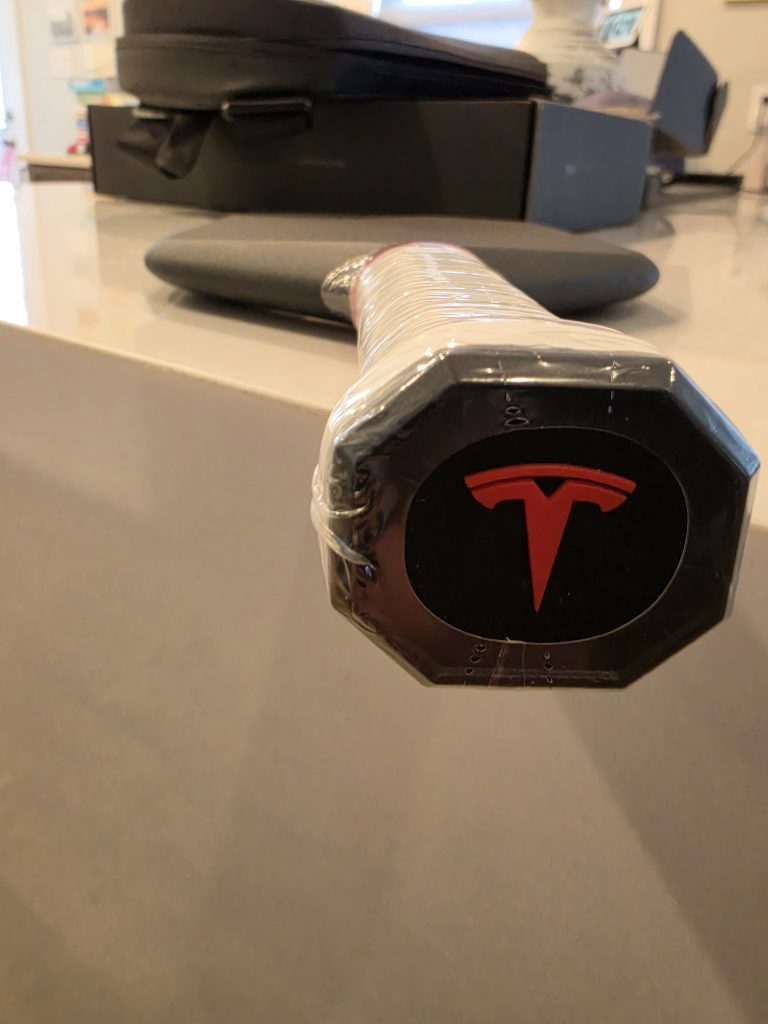
The Tesla Brand Stigma: Walking Onto Courts With a $350 Paddle
Let’s talk about something nobody mentions in reviews: the social dynamics of showing up to the courts with a Tesla-branded paddle.
Tesla as a brand carries baggage. Elon Musk’s political stances, Tesla’s quality control issues, the Cybertruck recalls…all of that comes with the logo. When you walk onto a court with a Tesla paddle, you’re making a statement whether you want to or not. And I play the game to escape real life.
I’m not saying this should matter. I’m saying it does matter, especially at public courts where pickleball is supposed to be the accessible, friendly, egalitarian sport. Showing up with a $350 paddle with a polarizing brand logo feels…off.
Need a break from the court?
I wrote a short story called "Dropkicks and Dinks" about a pro-wrestler finding solace in pickleball. It's featured in my new collection.
Get it on Amazon →What the Tesla Paddle Does Well: Spin and Defensive Resets
Credit where it’s due: this paddle generates absurd spin. The InfiniGrit surface is legitimately grittier than most paddles on the market, and independent testing shows spin rates over 2,400 RPM.
If you play a game based on heavy topspin serves, drive drops that dip sharply, and slices that curve away from opponents, the Tesla paddle delivers. The surface grabs the ball, and the aerodynamic design (which I was skeptical about) actually does seem to help with racket head speed on full swings.
Defensive resets are excellent. When you’re absorbing pace from opponents’ attacks and trying to neutralize the point with soft blocks and drops, the Tesla paddle feels plush and controlled. The foam core dampens vibration, and the TPU Power Ring stabilizes the face. You can place resets exactly where you want them.
Dinking is good. Not amazing, but good. The paddle has enough feel to manipulate the ball at the kitchen, but it’s not as crisp as a stiff honeycomb paddle.
What the Tesla Paddle Does Poorly: Power, Hand Speed, and Value
Power is mediocre. Exit velocity testing confirms it: this is a mid-tier power paddle. If you’re used to hitting drives with authority and putting balls away at the net with pace, the Tesla paddle will disappoint you. It’s dampened. It’s controlled. It prioritizes spin and touch over raw pop.
For 4.0-4.5 players who need that extra bit of power to finish points, this is a problem. I found myself hitting put-away attempts that should have been winners but came back because the paddle didn’t generate enough pace.
Hand speed suffers. That elongated, head-heavy design that looks so sleek in photos translates to slower reactions during fast exchanges.
It’s not $350 better than a $180 paddle. This is the core issue. Even if the Tesla paddle performs well in specific categories—and it does—it’s not performing $200 better than comparable paddles. The Honolulu J2NF costs $179 and is consistently rated as one of the best all-around paddles on the market. The CRBN 1X 16mm costs $220 and offers similar spin with more power. The Selkirk VANGUARD Power Air Invikta costs $250 and shares design language with the Tesla while delivering more pop.
You’re paying a massive premium for Tesla branding, limited availability, and the novelty of owning a paddle tested in a wind tunnel. From a pure performance-per-dollar standpoint, it’s terrible value.
Tesla Pickleball Paddle Resale Value: The eBay Secondary Market
Here’s where things get interesting from an investment perspective. The Tesla paddle has spawned a thriving resale market on eBay, with some sellers asking nearly double the original $350 price. But all signs show a serious cool off.
The first drop sold out in three hours. The second drop on December 22nd sold out even faster. As of March 2026, the paddle is unavailable on Tesla’s shop, and resellers are capitalizing on scarcity.
In January 2026, I saw listings for $600-700. In March 2026, I’m seeing listings for $450-500, and many aren’t selling. The hype is fading. People who bought to flip are realizing the market is smaller than they thought.
If you bought this paddle thinking it’s a collectible that will appreciate, like a Supreme drop or limited-edition sneaker, you’re probably wrong. It’s sports equipment. It will degrade with use. And unlike Tesla cars (which have cult followings), pickleball paddles don’t have strong secondary markets unless they’re banned (like the JOOLA Gen 3 paddles that tested over legal limits).
My guess: within 6-12 months, you’ll be able to buy used Tesla paddles for under $200. Maybe less if Selkirk does a third production run.
Who Should Buy the Tesla Pickleball Paddle?
After playing with this paddle for several weeks, here’s my honest assessment of who this paddle is actually for:
Buy it if:
- You’re a Tesla superfan and want every branded product they make
- You’re a collector who values limited-edition sports equipment
- You play a spin-heavy, finesse game and don’t need power
- You have elite mechanics and can compensate for the head-heavy feel
- You value conversation starters and don’t mind explaining your $350 paddle
- Money is not a concern and you want cutting-edge engineering
Don’t buy it if:
- You’re a 4.0-4.5 player who needs all-around performance
- You want maximum value for your money
- You rely on power to finish points
- You need fast hand speed at the net
- You’re uncomfortable with Tesla’s brand in 2026
- You’re hoping it will appreciate as a collectible
- You already have a good paddle and are considering “upgrading”
Better Alternatives for 4.0 Players
If you’re a 4.0 player considering the Tesla paddle, here are alternatives that will give you better all-around performance for less money:
Honolulu J2NF ($179): Best value paddle on the market. Performs at the level of paddles that cost $250+. Large sweet spot, good power, excellent control.
Six Zero Black Opal ($230): If you want elite spin like the Tesla but with more power and a traditional shape. Diamond-infused surface. Gen 4 foam core.
Selkirk VANGUARD Power Air Invikta ($250): Shares design language with the Tesla (throat hole, elongated shape) but costs $100 less and delivers more power.
CRBN 1X 16mm ($220): Trusted by pros. Consistent performance. Better value than the Tesla while still being premium.
Franklin C45 Aurelius 14mm ($200-220): Anna Leigh Waters’ signature paddle. Available in three thickness. The 14mm offers great balance of power and control for 4.0 players.
All of these paddles will perform better for the average 4.0-4.5 player than the Tesla, and you’ll save $130-170.
The Verdict: Is the Tesla Pickleball Paddle Worth It?
No. Not for most players.
The Tesla x Selkirk Plaid Paddle is a genuinely interesting piece of engineering. The aerodynamics are real. The spin is elite. The materials are premium. But it’s a niche paddle designed for a very specific type of player—someone with elite mechanics, a finesse-based game, and either deep pockets or a strong emotional attachment to the Tesla brand.
For recreational 4.0 players like me, it’s too expensive, too head-heavy, and too lacking in power to justify the price. Pickleball Partners Canada called it “a fun piece of pickleball culture” but couldn’t recommend spending nearly $500 CAD on a paddle whose primary differentiator is the logo.
I agree. This paddle is more about signaling than performance. It’s about owning a limited-edition collaboration between two high-profile brands. It’s about having the most expensive paddle at your local courts and dealing with the social dynamics that come with that.
If that’s what you want, if you value the novelty and the story and the Tesla connection, then buy it and enjoy it. It’s well-made, USAP-approved, and genuinely innovative in some areas.
But if you just want the best paddle for your game and your budget, spend $180 on a Honolulu J2NF and use the extra $170 to pay for court time, lessons, or a weekend tournament entry.
Should You Sell Your Tesla Paddle?
I’m still deciding whether to sell mine. Part of me wants to keep it as a curiosity—a reminder of the moment when a car company decided to make pickleball paddles and everyone temporarily lost their minds. Part of me wants to recoup some of my money before the resale market collapses completely.
If you’re in the same boat, here’s my advice: sell it now if you’re going to sell it at all. The resale market peaked in January. It’s softening in March. By summer, when people realize Selkirk might do a third production run or when the hype fully dies down, you’ll be lucky to get $300 for a used paddle.
List it on eBay for $425-450 and take the first reasonable offer. You’ll take a loss, but you’ll recoup most of your investment.
Or keep it, accept that you overpaid for a conversation starter, and enjoy the premium spin and defensive resets that it actually does deliver.
Final Thoughts: The Tesla Paddle and Pickleball’s Premium Problem
The Tesla paddle represents something bigger than just one overpriced piece of equipment. It’s a symptom of where pickleball is heading as a sport: premium products, celebrity endorsements, luxury branding, and a growing divide between recreational players and people willing to spend serious money on equipment.
This paddle costs more than a high-end tennis racket used at Grand Slams. It costs more than most beginner guitars, decent bicycles, or entry-level golf clubs. And it’s not even close to being the best-performing paddle in its price range.
But it sold out in three hours. Twice.
That tells you everything you need to know about the current state of pickleball. We’ve gone from a sport played with wooden paddles in retirees’ backyards to a sport where people drop $350 on equipment because it has the right logo.
I’m not saying that’s good or bad. I’m saying it’s where we are.
And if you’re considering buying a Tesla paddle in 2026—or if you already bought one and you’re having second thoughts—just remember: your DUPR rating isn’t determined by your paddle. It’s determined by your footwork, shot selection, consistency, and decision-making.
A $350 paddle won’t fix those things. But $350 worth of lessons, court time, and tournament experience absolutely will.
P.S. – I sold my Tesla pickleball paddle with zero regrets. Happy to have tried it but do not need to carry it in my bag.
P.P.S. – A quick note on the new Tesla Aurum paddle that just dropped: same exact shape, same PureFoam core, same InfiniGrit face, same head-heavy swing weight, same elite spin and same mid-tier power as the Plaid I already tested and sold. They simply wrapped it in a gold Cybercab-inspired finish, shaved the standalone price to $295 (or kept the $350 bag bundle), and called it limited again. If you liked the original for the engineering curiosities, this one will feel identical on court. If you thought $350 was already absurd for the performance, paying nearly the same for a new colorway doesn’t suddenly make the math work. Same strengths, same shortcomings, same “look-at-me” energy—just shinier. Most 4.0 players should still walk away and put that money toward lessons or a paddle that actually moves the needle.